Many Republicans plan to skip the House GOP retreat as tensions run high inside the party. Fewer than 100 Republicans have RSVP’d to attend the retreat, which is less than half of the entire conference, MSNBC’S Katie Phang is joined by MSNBC’s Johnathan Capehart and The BBC’s Katy Kay. (Check out The Beat’s playlist: https://msnbc.com/ari
Trump has taken the Republican Party into his own stream of income available exclusively to him and his family by purging the Republicans from party leadership that refuse to bow to him in complete blind obedience and absolute loyalty with fealty going only to him, allegiance only to him, decisions only made by him, his perspectives on everything as the only one used (whether they make any sense or are based in reality or not.)
From an interview with Bill Kristol of the Bulwark on Amanpour recently –
(5.18)>>Now they’re going to come back with really you know the real plans of how not to be thwarted. So I think it’s much more dangerous this time. >>So what do you think they’re going to do? >>The things Trump tried to do after he lost the election November 3rd to January 6, what he tried to do in the defense department, what he tried to do in the Justice Department, what he tried to do in the intelligence agencies. I think those are all things he will now try to do from day one.
Will he transform America on January 21st 2025 into an Orban-like Hungary state or something like that? No, of course not. We have many many morestructures and institutions that will slow him down so to speak. But over a year, two years, three years the kinds of appointees he might put into Justice and Defense, all these barriers we kind of take for granted. The Criminal Division of the Justice department is not going to be used to go after your critics or that contracts are not going to be given out in other departments simply to friends, all the things that have happened on the margins of American politics for decades and for centuries and that we’ve mostly pushed back successfully against but those are the abuses we think of right? The scandals that Nixon and the justice department Nixon trying to use the CIA those scandals will become kind of the routine for Trump.
It didn’t happen because there were a lot of barriers in place to just having a president snap his fingers and fire people from the civil service or from military service but again if they get to work on that on January 21st 2025 uh you know a few months later they can remove a lot of those barriers so that’s what uh Trump sort of said when you mentioned Victor Orban the authoritarian leader in Hungary comes down to Mara-Lago last week and Trump said I want to be that way I want to be able to just order and he orders and he gets things done
(9.16) // but the dysfunction is not solved by dictatorship or by arbitrary rule that makes things even worse uh there are re one of the worst things about the whole about Trump and Trump ISM it makes it harder to pursue sensible reforms because honestly what has to defend the status quo against these kinds of attempts at arbitrary power but the status quo does need to be reformed to be fair Joe Biden has done a fair amount of uh reforming he’s pursued a pretty activist agenda he’s gotten a lot of stuff through Congress so it’s not as if we’ve seen entirely seen dysfunction in the Biden era and he’s got bipartisan support let’s say for aiding Ukraine in foreign policy uh and there it’s Trump himself and Mike Johnson his his Speaker of the House who’s stopping a by a policy that it has bipartisan support of helping Ukraine against Putin get through so you know they complain about the dysfunction but then they add to the dysfunction
He’s not wrong – the people Trump is pulling around him in deals to get their support is like watching all the powers of our government being used as trading cards or assets to be given out in trade for Trump getting his power to take over our presidency. And, all the powers and resources of our nation are at stake.
Meanwhile, Russia mocks Trump hosting Orban at Mara-Lago like he’s a king. But, he thinks as president, the powers are those of a king. He worshiped and praised Orban and he does Putin even more so. And, it is obvious that Trump will install all the powers of a dictatorship using our government resources to do it with many of those people and organizations like the Christian Nationalists getting much of our governments’ power in trade for supporting him in their evangelical churches, using their massive organizations’ resources, their money to buy ads and influence campaigns online, etc. ad nauseum.
Olga Skabeeva gloats over Viktor Orban and Donald Trump
Rep Zoe. Lofgren (D-CA) and former member of the January 6th Select Committee, Tim Heaphy, former lead investigator for the January 6th Select Committee, and Rick Stengel, former top state department official during the Obama Administration join Alicia Menendez in for Nicolle Wallace on Deadline White House with reaction to the House GOP continuing to do Trump’s bidding by introducing legislation that Donald Trump did not engage in insurrection, the same week the Supreme Court is set to hear his ballot eligibility case.
CLIP OF TRUMP SAYING – 0:08
PRESIDENT OF THE UNITED STATES, THE AUTHORITY IS TOTAL. THAT’S THE WAY IT’S GOT TO BE.
>> WHEN THE PRESIDENT DOES IT, IT’S NOT ILLEGAL?
>> I’M SAYING A PRESIDENT UNDER ARTICLE TWO, IT’S VERY STRONG. READ IT. >> IT GIVES ME ALL THESE RIGHTS.
Wannabe Dictator: Donald Trump has confused the job of President with King, Feb. 7, 2024
Trump and the Republican Party are compromised and no longer exist as supporters of the United States, our Constitution and our founding principles of freedoms, human & civil rights for all citizens, equal justice and the rule-of-law, liberty for all as a God-given right to every human being. They don’t believe any of that and fully intend to destroy all of it in pursuit of their self-serving goals at the expense of all of our lives, all of our potential and all of our nation’s future.
There is no good in this to stand by and pretend it isn’t all that bad to have a dictator. The king we fought against was no different than Trump and he is no less a tyrant than Hitler was or Putin is now.
The Republican Party is gone. Its resources belong to Trump in every way now. There is no separation between Fascism and the Trump plans to use our government as it suits him. There is the Election 2024 in November that is likely to be distorted in all the ways we’ve watched Trump do in 2016 and in 2020.
RUSSIAN INTERFERENCE IN 2016 U.S. ELECTIONS
CONSPIRACY TO COMMIT AN OFFENSE AGAINST THE UNITED STATES; FALSE REGISTRATION OF A DOMAIN NAME; AGGRAVATED IDENTITY THEFT; CONSPIRACY TO COMMIT MONEY LAUNDERING
On July 13, 2018, a federal grand jury sitting in the District of Columbia returned an indictment against 12 Russian military intelligence officers for their alleged roles in interfering with the 2016 United States (U.S.) elections. The indictment charges 11 defendants, Boris Alekseyevich Antonov, Dmitriy Sergeyevich Badin, Nikolay Yuryevich Kozachek, Aleksey Viktorovich Lukashev, Artem Andreyevich Malyshev, Sergey Aleksandrovich Morgachev, Aleksandr Vladimirovich Osadchuk, Aleksey Aleksandrovich Potemkin, Ivan Sergeyevich Yermakov, Pavel Vyacheslavovich Yershov, and Viktor Borisovich Netyksho, with a computer hacking conspiracy involving gaining unauthorized access into the computers of U.S. persons and entities involved in the 2016 U.S. presidential election, stealing documents from those computers, and staging releases of the stolen documents to interfere with the 2016 U.S. presidential election. The indictment also charges these defendants with aggravated identity theft, false registration of a domain name, and conspiracy to commit money laundering. Two defendants, Aleksandr Vladimirovich Osadchuk and Anatoliy Sergeyevich Kovalev, are charged with a separate conspiracy to commit computer crimes, relating to hacking into the computers of U.S. persons and entities responsible for the administration of 2016 U.S. elections, such as state boards of elections, secretaries of state, and U.S. companies that supplied software and other technology related to the administration of U.S. elections. The United States District Court for the District of Columbia in Washington, D.C. issued a federal arrest warrant for each of these defendants upon the grand jury’s return of the indictment.
Trump is doing a tremendously wrong thing for the US and our citizens when he claims he is still president and even more so, when he claims Russia’s interference in our elections is a hoax. Maybe he should move to Russia. He would love it and be so much happier there under Putin’s rules.
Trump as dictator on Day One will be a dictator on Day Two. Look at the long list of civil ,& human rights roll backs done by Republicans when he was in office before – https://civilrights.org
Trump does not deserve to be president because he does horrible things when he is president or given the opportunity to hold that much power and where he can order the people in our government to do what he wants without anything to hold him back from what he chooses to do with it.
We have an option to choose who we want for our president or any place in our government. This indicted criminal and known business fraud Trump and his admiring, worshipful fealties to money, power, foreign dictators, big business donors and billionaires – should not be on the list of people chosen for anywhere in our government, especially not for our nation’s presidency.
cricketdiane, 03-14-24
Trump FOREIGN EXPOSURE Again Surges Into CROSS-HAIRS
Mar 13, 2024 Joe Biden delivered his State of the Union Address last week, and urged Republicans to join him in standing up to Vladimir Putin. He also called out former President Trump for telling Putin he could do “whatever the hell he wants.” Investigate journalist Dave Troy discusses the history behind Donald Trump’s affinity for Putin and his strongman approach to governing. Support Veterans for Responsible Leadership Here: http://www.vfrl.org. Support Against All Enemies here: http://www.patreon.com/KenHarbaugh
Republican Fascists MAGA Trump cult micromanaging our lives in the most government intrusive policies in our nation’s history like Nazi Germany and the old USSR did – that’s what they think is needed to be done to all of us and use our country’s resources to do it.
You know what these Republicans MAGA Trump Fascists think and believe –
*That you need them deciding who you can and can’t love, when you can or can’t have a baby and how women in your family can and cannot have the medical care they need and of what kinds.
*That you need them deciding who you can support politically and whether your vote should be counted or not – and if you’re not voting for them, Trump and Republicans think you don’t need to have your vote counted or cast that vote in the first place.
That you need them deciding what your lifestyle is to be and the options available to you based on your class as they’ve defined it, partially determined by how much money you make, your gender, your religion and who your friends are.
But, I don’t want big government getting into my life, say many of the MAGA Trump cult members. Well, the dictator wannabe Trump who worships Putin, Orban, Kim Jong-Un, Erdogan, Xi and Hitler is planning an intrusive government on steroids. He has said so. His fascist elected Republican office holders have said so. Project 2025 and Agenda 47 that he plans to use to remake our government into a fascist dictatorship says so.
What else do Fascist Trump supporting Republicans think and believe –
Apparently, they think we need a dictatorship that forces every American to conform to the will of Trump and bow down to worship him as they do, live as the Heritage Foundation Christian Nationalist Fascist Coalition forces us to live, and for us to live without democracy and freedom as they do in Russia, where they believe everything is traditional family values wonderful like in the 1950s TV shows.
And what else do Republicans in the throes of Fascism now, believe and think to decide for us? –
*That you need them to take democracy and freedoms away in case you might use them wrong or contrary to whatever they want. You know that if you and I have freedom to think for ourselves and make our own choices, we might do things in different ways than they’ve determined we all must – like have religious and political views different than theirs or refuse to bow down to Putin, and to Trump every day as in North Korea.
*That you need them to take away your rights to your own choices and your own speech and your own body and your rights to vote, along with your rights to think differently than they do, your rights to be empathetic and caring, your rights to refuse, your rights to education including for your children, your rights to read what you want, your rights to write what you want, your rights to go where you want when you want, your rights to opportunities and prosperity in the United States and your right to equal justice under the rule-of-law. (Apparently, you’re supposed to buy that through bribery and extortion like they do in Russia and Hungary – as Trump is proving he gets to do right now, even in our system as it is.)
*That you need them to take over your city and fill it with armed National Guard and US Military (despite the current illegality of that under our Constitution), so you will act and speak as they believe you should – most of those freedoms we now enjoy will be gone with more removed every day that Republicans get positions of power in states and from this fall’s election. Look what the Republican Freedom Caucus serving Trump Fascism have done in Congress this year. It is obscene.
But, Republicans are listening to people like Tucker Carlson and Sean Hannity, to Steve Bannon and for years, Rush Limbaugh and whatever talking points Roger Ailes was choosing to promote daily across all the Fox broadcasting News As Entertainment and Propaganda channels. Here is where that is now –
Feb 28, 2024 Steve’s Warnings Steve Schmidt discusses how Tucker Carlson has become a useful idiot for Vladimir Putin.
Republicans serving Trump MAGA Fascism to install dictatorship across the United States over the next four years when they’ve been seated in power – which includes a lot more seats than the presidency. These efforts by the Council on National Policy, Heritage Foundation and the Republican Party plus their sister organizations of several hundred, PACs, SuperPACs, Republican Fascist-serving Media Machine, Think Tanks, political consultants and lobbyists have been running a number of states into a hellish place of the worst economic landscape, most sexually and socially perverse hellscape and most uneducated, ignorant, underemployed, unrealized potential of any time in our history. Now, they are expanding that vision across all of our nation as they started in full force during Trump’s first opportunity to give them America in trade for him getting to play the office of our president for all the money he could get.
Other things that Republican Fascists who are supporting Trump as dictator think and believe –
*That you need them to decide the version of god you pray to, the religion you must have and the religious beliefs you must adhere to in their definition of what that is in practice (& it is the opposite of what Jesus taught and what the words of his teachings mean – it’s also the opposite of what it is to be godly, good or enjoy any of the fruits of God’s Spirit as detailed in the Bible.)
In fact, as evidenced by MAGA Trump supporters and Republicans who’ve fallen into absolute allegiance and loyalty to Trump as dictator of their every action and every word (Jim Jordan and Marjorie Traitor Greene come to mind plus the extremists of the Trump cult with their actions,) – they show the fruits of fascism and the opposite traits of everything the Bible tells us about the fruits of God’s Holy Spirit. They sure aren’t at peace inside their own skin. They are forever agitated, aggravated at the most petty, trite events in their everyday lives, overly reactive like they have a chip on their shoulder all the time, no joy, no brightness of their spirit, no kindness and unconditional love for others, no empathy and compassion, and in fact, they’re cruel, manipulative and often, sadistic.
They think you and I need them to decide what we can learn, who can be allowed to learn, who can be taught, what can be taught, the frame of referencing used so that all their beliefs are applied exclusively to bias whatever is taught, all the things that can’t be taught anywhere, all the things that can be said and when they can’t be said (like don’t say gay, in Florida right now under the Fascist Republican anti-democracy laws passed by DeSantis and his Republican Party run legislature.)
*That you need them deciding for you and that those decisions you would normally, freely be making for yourself, for your children and for your family should not belong to you to make (and this isn’t about whether you can be free to not wear a mask during a pandemic or being asked to be kind and considerate of others by a politically correct choice of words that aren’t racist, misogynistic or insulting in prejudicial ways.)
This fascism as a dictatorship run by Trump and Christian Nationalists will remove a lot deeper rights and freedoms that are far from being some small inconvenience like those things. Talk about government intrusion into your life, right now these same fascists have removed women’s rights to have an abortion, but also to have a D&C for any other reason either because doctors are afraid to do them even if the life of the woman is at stake. And, contraception products along with other reproductive rights are under threat by them now in every state they run.
But at the same time, none of these rules and laws will apply to them:
The subpoena, first reported by The New York Times, was for records related to payments that former Trump lawyer Michael Cohen helped arrange to the porn actress Stormy Daniels after she claimed she had an affair with Trump.
Federal prosecutors in New York and Washington both spent months probing payments made during the 2016 presidential campaign to two women who said they had affairs with Trump, including Daniels and the model Karen McDougal.
Cohen, who made one of the payments himself and arranged for American Media Inc., the parent company of the National Enquirer, to pay the other, pleaded guilty to campaign finance violations, tax evasion and other crimes and is serving a three-year sentence.
The man credited with putting Donald Trump in the White House has a long, lurid history of swinging and sexxx-rated antics.
Roger Stone — a long time friend of the U.S. president — has for years been a frequent flier at a Washington-area sex club.
According to a report in the Daily Mail, by midnight on Saturdays, the club had devolved into a giant orgy with sex acts being rampant as porn played in the background. (…)
The Stones were members of the club and also regulars at New York sex club, Le Trapeze.
It didn’t exactly fit with the squeaky-clean Republican party that Stone was closely associated with. He had worked for former presidents Richard Nixon, Ronald Reagan and George H.W. Bush.
Toronto Sun, 2019
So, while women are supposed to stop working outside the home, stay in the kitchen, be seen and not heard and while children and women can be sexually assaulted by any white Christian Trump supporting man or church minister – the rest of us are subjected to a different set of requirements and rules than they are. The double standard is not even hidden. Republicans don’t mind that at all. The dictators and their oligarchs always get to do whatever they want and get away with it. The laws don’t apply to them and don’t apply to their friends either.
Republicans believe in liberty, economic prosperity, preserving American values and traditions, and restoring the American dream for every citizen of this great nation. As a party, we support policies that seek to achieve those goals.
None of that seems like a dictatorship would fit the Republican Party and yet that is the path they have chosen to use serving Donald Trump and the Heritage Foundation and the fascist far-right movement that is funding and supporting disinformation, propaganda and far rightwing parties around the world backed by Russia and Putin’s foreign policy efforts.
Vladimir Putin photographing with members of Moscow’s Night Wolves biker club on their August 10, 2019 ride in Crimea, which Russia annexed from Ukraine in March 2014. Photo: kremlin.ru
In March 2021, one survey indicated that five factions of Republican voters had emerged following Trump’s presidency: Never Trump, Post-Trump G.O.P. (voters who liked Trump but did not want him to run for president again), Trump Boosters (voters who approved of Trump, but identified more closely with the Republican Party than with Trump), Die-hard Trumpers, and Infowars G.O.P. (voters who subscribe to conspiracy theories).[10] In November 2021, Pew Research Center identified four Republican-aligned groups of Americans: Faith and Flag Conservatives, Committed Conservatives, the Populist Right, and the Ambivalent Right.[11]
As of 2023, congressional Republicans refer to the various House Republican factions as the Five Families.[12][13][14][15] Derived from The Godfather, the term refers to Mafia crime families.[13]The Five Families consist of “the right-wing House Freedom Caucus, the conservative Republican Study Committee, the business-minded Main Street Caucus, the mainstream Republican Governance Group”, and the Republican members of the bipartisan Problem Solvers Caucus. The House Republican factions overlap with one another.[14]
These are the people who want to make our complete array of decisions and options for us along with what options and decisions are to be fully excluded from us. Trump by far, is the most ignorant option for a decision-maker on anything and he chooses only those who will sign a legal contract pledge of absolute loyalty and allegiance to him, many of which started out smart but quickly must prove they are not as smart as he is. It is a roller coaster ride to the bottom for good thinking, rational thought, sane reasoning, stable intellectual methods, scientific and educated approaches, mental acuity, learning, discernment of facts from falsehoods, and all of it excused as “rhetoric”.
Trump allies welcomed reports that the Republican National Committee’s new leadership team began firing dozens of staff on Monday.
Why it matters: Reports of plans to purge some 60 staffers come days after likely Republican 2024 presidential nominee former President Trump’s allies were installed in key committee leadership roles.
The RNC voted for the Trump-backed Michael Whatley to become chair and the former president’s daughter-in-law Lara Trump to be co-chair on Friday, some eight months before the 2024 election.
Axios, March 2024
This reminds me of what Hitler did when he took over the party and what Saddam Hussein did when he took over the Ba’ath Party fully using the Hitler playbook in application. Now, as we all watch Trump and his fascist coalition do it –
What they’re saying: Rep. Marjorie Taylor Greene (R-Ga.) wrote on X: “MAGA is now in control of the Republican Party!! We will continue to need everyone’s help all the way across the finish line!”
Charlie Kirk, who leads the pro-Trump youth group Turning Point USA, in a post to X celebrated the “Bloodbath at the RNC” as “excellent,” adding: “The anti-Trump sleeper cells all have to go. The RNC is getting ready to win.”
These are the days in which is important to ask ourselves – Will Democracy Die With Me? Will this be its last gasp after 246 years of successful democracy, freedom for our people, the United States, our Constitution, our human and civil rights, our rule-of-law and our options for our lives? For what, will we have lost our democracy? To serve Trump and his Fascist Republican friends with every life of every American to become their subjects and to serve their pleasure of oppression and sadistic cruelty while allowing them to divert every resource and asset of our nation to their own hoarding of and profiting off everything for themselves?
The far right has made public its plans for an ‘ideal’ America if one of their allies wins the 2024 presidential election in its 2025 Presidential Transition Project. Project 2025 is spearheaded by the far-right think tank Heritage Foundation and supported by more than 80 organizations, many well-known for their extreme positions, and for pushing hate and Christian nationalism. The authors and supporters of Project 2025 claim this plan will “rescue the country” from “elite rule and woke cultural warriors.”
Global Project Against Hate And Extremism, 2024
The 2025 Presidential Transition Project paves the way for an effective conservative Administration based on four pillars: a policy agenda, Presidential Personnel Database, Presidential Administration Academy, and playbook for the first 180 days of the next Administration.
There is no better time than the present to get involved and make every effort to stop these forces that would steal our freedom and liberty away to serve their own profits and their own perverse ends. The time is gone, if you wait until election day, decide not to be bothered with voting, never speak up and don’t take this seriously when it is this serious and factually based, more serious than I can convey.
Once democracy and freedom is lost, getting it back could take hundreds of generations of our lives and our children’s children suffering a nation under fascist authoritarian dictatorship. They will never know freedom, but we have. We should never give that up. Keeping Democracy is worth the fight to save it.
Trump, Putin, Orban, The Heritage Foundation and its 200 companion organizations, The Republican Party and Christian Nationalist Fascist movement along with the “conservative” far rightwing organizations and political parties in Europe, South America, Africa, the Middle East and in the finance industries and business leadership is nothing but hiding their cruelty, power lust, money hoarding, resource hoarding and desire to be free to be corrupt and even criminal without accountability.
They take advantage of the fact that people don’t have time to figure it out, to learn more about them and what they’re trying to do, what they’ve already done and how their actions and policies will impact the people they are conning and using. Plus, they hide behind the Republican Party, Evangelical organizations and churches, leaders like business community organizations and religious conservative political organizations and PACs that claim to believe in traditional family values, so people believe they can trust them. And, people want to believe they can trust them.
Then, they abuse our children and women, abuse those who are vulnerable to their abuses from seniors to minorities to disadvantaged communities, steal, embezzle, divert resources, commit fraud, con, cheat, engage in all sorts of perverse and cruel behaviors, lie, cover each other’s bad behavior and gambling with other people’s lives. They cling to all power like they can never be satisfied to have enough.
“To call your opponent ‘vermin,’ to dehumanize them, is to not only open the door but to walk through the door toward the most ghastly kinds of crimes,” writer and historian Jon Meacham said on MSNBC’s “Morning Joe.”
Speaking to a packed crowd inside Stevens High School auditorium in Claremont, New Hampshire, on Saturday, Trump, who is seeking a second term in the White House, said: “We will put America first and today, especially in honor of our great veterans on Veterans Day, we pledge to you that we will root out the communists, Marxists, fascists and the radical left thugs that live like vermin within the confines of our country.”
He accused these groups of doing anything “to destroy America and to destroy the American dream” and he went on to repeat his baseless claims of election fraud.
The current Republican Party is completely owned by Trump’s fascist supporters, Christian Nationalists including the Heritage Foundation that he’s made a deal with to run our government and put their policies into operation throughout our federal branches and agencies in trade for their political support, and the far-right “conservative” rightwing fascists, their political parties and organizations across Europe and the United States partly funded by, heavily influenced by and with their anti-democracy based policies set by Russia.
In my innocence, I thought Project 2025 was just about firing the qualified civil servants so that the federal government would fail, and with it the economy. I hadn’t realized there was a Christofascist angle.
What was once considered a political party in support of the US and our national interests, the interests of our people and our Constitution as well as in support of our national security, our democracy and our economic well-being that is still labeled, The Republican Party with Trump at its head using his loyalty pledges as Hitler required – is not the political party as it was of Eisenhower and Nelson Rockefeller.
Now, it is a Republican Party serving something else, who wants a dictator, that supports a dictatorship in place of our democracy and freedom, and intends to use our country to enrich themselves while enslaving the American people to their will.
That is no longer true: today’s Republican Party and the larger “conservative” movement and white right view multiracial pluralistic democracy, the rule of law, the Constitutional order, and its governing institutions as illegitimate and corrupt. They are to be torn down and replaced with a system of competitive authoritarianism and White Christian herrenvolk tyranny of the minority where the Republican fascists and larger right-wing rule for all time and by any means necessary – including violence.
(. . . ) Agenda 47 would consist of an end to birthright citizenship, further criminalizing transgender people and the LGBTQI community more broadly, expanding the thought crime and other censorship laws to end the teaching of “critical race theory” and to defeat “Woke” and “Black Lives Matter”, attacking academic freedom and replacing it with “patriot education”, implementing a national stop and frisk law, pardoning the Jan. 6 terrorists, putting homeless people in camps or some other designated area under threat of arrest, building high tech “freedom cities”, ending the professional civil service and replacing it with right-wing political appointees and other such partisan agents, gutting the Department of Justice and other parts of the government that opposed Trump’s attacks on democracy and the rule of law, executing drug dealers, starting a trade war with China, and making “peace” with Vladimir Putin by withdrawing support for the Ukrainian people and their freedom struggle.
In many ways, Agenda 47 is a continuation of the fascist and other authoritarian policies Trump put in place during his first regime but now made even more extreme and cruel.
See, it’s just lies. The power lusting that drives it is hiding behind lies as Trump, as Republicans, as their media outlets and conservative Christian evangelical machine tell people what they want to hear and what they want to believe while doing something far away from people’s best interests and far from the interests of our nation. And, sometimes while telling their followers what they plan to do, they say it publicly knowing their supporters will never believe they would do such a thing – as with this. about dismantling Social Security and Medicare that Americans have paid into all their working lives:
3:08 – Lawrence O’Donnell
>> Many of my Republican friends want to put Social Security, Medicare back on the chopping block again. If anyone tries to cut Social Security, Medicare or raise the retirement age again, I will stop them.
Even this morning Donald Trump said cuts to Social Security, Medicare are on the table again. The bottom line is, he’s still at it. I’m never going to allow that to happen. I won’t cut Social Security. I won’t cut Medicare.
>> And here’s what Donald Trump said on CNBC today about cutting Social Security, Medicare and Medicaid.
>> So first of all, there is a lot you can do in terms of entitlements in terms of cutting.
>> Of course, later, the Trump campaign issued a statement claiming that Donald Trump was only talking about cutting waste in those programs. I know everyone thinks there is waste in all government programs, but no one has ever identified any waste in the Social Security program that can be cut or in Medicare.
It’s worth comparing Medicare to private health insurance. In private health insurance. 17% of the premiums that you pay for private health insurance are not used for health care. They are used purely for administrative costs, executive salaries and in insurance companies, that also includes advertising costs – massive advertising costs. In Medicare where the advertising costs are 0, in the government-run health insurance program.
Everything the Republicans have always told you that would lead you to expect that the administrative costs of Medicare must be much, much higher than private insurance. And again in private health insurance, the administrative costs, including advertising are 17%. And in Medicare, the administrative costs are 2%, making Medicare simply the most efficient health insurance program in the world.
Donald Trump is lying about cutting waste for Medicare. And the proof that he is lying about that is that in his 4 years in the presidency, he never once attempted to cut any waste from Medicare because his people couldn’t find any and he never attempted to cut any waste from Social Security because his people could not find any nor did he try to cut any waste from Medicaid.
But what Donald Trump said about cutting those programs today was very, very clear.
Watch The Last Word With Lawrence O’Donnell Highlights: March 11 –
Not only did Trump and Republicans increase our national debt more than all of the presidential administrations in our history put together, in order to give a $2 Trillion tax break to their wealthy donors and corporations that support them, they commonly lie about our inflation rates to make our economic well-being to appear distorted and frightening to the American public.
There are conspiracy theories promoted by MAGA, Trump, the Republican Party, Putin, Orban, the European far-right and rightwing “conservative” political parties, people like Steve Bannon and Stephen Miller among others including retired general Mike Flynn in his astroturf grass-roots events – that are literally promoting lies, distortions of facts, half-truths, illogical reasoning, twisted and distorted reasoning, propaganda including Russian propaganda and talking points, destructive and violent ideologies of fascism, and that are using methods to turn people’s good characteristics against them, like their patriotism and their religious desires to please God.
Today’s GOP / Republican Party has a lot of these people.Nobody should’ve blindly trusted people like this.
A comment from twitter yesterday describes the candidate for president with his current position –
Trump is handing over $90M bonds in a rape/defamation case as witnesses are going public about him committing espionage as his cabinet officials are publicizing his love of Hitler as he’s bankrupting the RNC as he’s two weeks away from going on trial for trying to cheat in the 2016 election and also has to come up with nearly half a billion dollars on the same day as his trial as he’s being sued by his business partners in his social media company as Scotland is suing him for fraud as he’s meeting with foreign authoritarians at Mar-a-Lago where he was keeping the classified documents that he was caught on camera moving onto a plane while his lawyers were meeting with the FBI before he flew the documents to NJ where he buried his wife on the golf course How is this even possible
You missed the part where he was going in his plane with the boxes of classified docs where he was meeting with Saudi officials to open a jointly owned golf tournament. Wasn’t that it?
He’s not wrong. This post so clearly outlines the reality of what the Republican Party using Trump as their candidate intend to do to our nation that will remove democracy, freedom, liberty, rights and the rule-of-law to replace them with an autocratic fascist government of kleptocracy and stealing our nation blind as Putin and Orban have done in their countries.
In fact, Trump will likely be working for them rather than us, as much as he loves and worships them along with other dictators around the world. America will simply be a satellite governorship run by Trump as a ruthless dictator to emulate the horrors meted out by other dictators he admires including Hitler, and answerable to his “upline” bosses – Orban, then ultimately his big boss, Putin. That’s while the Heritage Foundation, Christian Nationalists and Dominionists get to run the management of our country to suit themselves in trade for insuring Trump’s and the fascist Republican Party’s installation as our dictator.
And, we won’t be able to lock up anything away from them getting to use it as they see fit – not our daughters or sons, not ourselves, not our talents and resources, not our time, not our lives, not the people we care about, not anything – many Republicans have already proven what they will do with these to gratify themselves leaving permanent, irreparable damage –
Kevin Brooks@KBrooks_MX And a few more…. When they ain’t crimin’, they’re rapin’. If you support a rapist then you’re a rapist.
There are many more. Some people have collected a lot of these and they number in the hundreds for the Republican Party leaders and officials (just counting since 2016 forward from Trump’s taking over the Republicans’ machine.) But, at the same time – Republican supporters are lied to and led to believe the opposite is true and that they can trust Republicans and rightwing organizations that are part of this Fascist Christian Nationalist movement. Don’t even get into the church part of this – it is extensive in its known abusers of women, children and vulnerable populations including people with disabilities being subjected to sexual assault, rape and pedophilia by its ministers and other trusted members that is well known now.
There is no good in what this does to our country and to the people of our nation. It has not yielded good since 1971 when the Powell Memo started this thrust toward Fascism using our Republican Party and what had been, God’s churches rather than what distorted religious institutions they are now. By lies, people believed that trust could be given to them. By lies, people believed that the reason why jobs were lost and our nation’s money is worth less buying power than it was – had to do with whatever scapegoat the Republicans told them caused it, through the media efforts of Rush Limbaugh, FoxNews and all the other parts of the Republican Party media machine.
It doesn’t matter that corporate raiders were allowed to strip apart, dismantle and pocket the profits of every large successful US corporation that had been our employers. It doesn’t matter that the doors to our Treasury were thrown open to bail out banks, Wall Street brokers and investors, insurance companies and financial products that were rotten at their basic level because of their own gambling on high risk maneuvers and speculation and shell games.
None of the blame goes to them and the Republican Party who did everything possible for them to do it. The blame was placed on scapegoats and still is – from single mothers with children, to seniors, to homeless Americans, to people who don’t go to the evangelical church or whatever Christian church Republicans favor at the moment, or people who aren’t Christians at all, or people that live in big American cities, or on liberals, or Democrats, or Americans as a people who want better for themselves when they’ve worked for it – rather than watching that being ripped away by some nonsense done on Wall Street or Washington by bankers and Republicans.
This is from the Republican Party who calls the people of the United States, their enemies – as does Trump. They have been saying that publicly since before Reagan in the 1980s and the Moral Majority bullshittery of that political atmosphere. And, it’s been ongoing every since. But, in the worship of money – Trump and Republicans sure do quite the dance –
Apparently, as Rachel Maddow points out – the company decided to host a $10k per plate donor dinner supporting Trump immediately before he tweeted out this change of mind about what he thinks of the company. As with his hotel in DC at the old post office, Trump Tower and other properties he manages or owns, foreign governments leased spaces in them commonly and extensively while he was president and seemed to get quite a few considerations in return from him. That includes so many ways that Trump and the Republican Party helped them using our government, our taxpayer resources, our national security information, our opportunities that can benefit other nations and businesses, and our legislative bodies that can give them an unfair advantage using our own resources against us.
“I didn’t elect your church to run my life or my country.” ( – cricketdiane) Nobody elected these churches to run our nation Nobody elected the Council on National Policy, a rightwing think tank to decide our state and federal government’s policies that we have to suffer and endure (and have endured for years.)
Nobody elected oil companies to run our government, nor Wall Street brokers, nor corporate raiders and hedge funds, nor foreign governments. As this example from what I noted in 2022, having foreign governments and these other players set policy, as they did in Brexit for instance, does not serve the nation well when it comes right down to it. Their vested interests are clearly not in line with the interests of the country nor its people:
After Russia funded, troll farmed & pushed Brexit on UK’s people – for what? #Russia doesn’t offer anything better than what we already had – absolutely nothing. Nobody, not even Russians want a car made in Russia, not a yacht, not a coat, not a designer handbag, not technology,
not grocery products, not manufactured goods, not washing machines or refrigerators – nothing but fish eggs they stole off a perfectly good fish to harvest & rancid potato juice set up long enough to smooth out the nastiness of it which other nations now do better. RU soldiers
are in Ukraine destroying everything & killing everyone but stealing tvs, washing machines, nice cars, dishwashers, electronics as if they can’t get those back home where they came from – AND they’re not getting paid to top it all off. Their economic psyops war on UK did nothing
but put more people in the same situation hungry for appliances they can’t afford, mucking up businesses & livelihoods w customs & paperwork nonsense, thousands of manhours, brain power, money, time & resources sorting out how to do Brexit instead of governing, helping UK & EU to
thrive & grow while settling small differences instead of the damn large ones Brexit caused. It’s ridiculous. Why does anyone believe Russia, Hungary, Belarus offer anything worth having? Their people aren’t building amazing new things, better things to make people’s lives better
because doing it Putin’s fascist far rightwing way doesn’t yield great strong nations that prosper, create better lives, new things, new discoveries, apply those discoveries, innovate, invent, build. They just don’t. Nobody wants the things they make because they aren’t the best
in any category. That’s what fascism does – it guts the strength & brilliance of a nation’s people becoming nothing but cannibals of those people’s lives & energies while devouring every national resource incl natural resources belonging to the people && the nation to serve the
absurd pointless whims of a few who get to hoard everything. Explain to me why anyone would buy Russian tanks if they are able to buy anything else from anywhere else in the world? Well, they wouldn’t & everyone knows why. They’re POS death traps for their own soldiers. Western
Democracies have excelled beyond measure across vast expanses of ideas, subject matter, expertise, education, accomplishments, inventions, innovations – not because of leadership but because our form of democratic republic allows it, supports it, enhances to opportunities for all (to)
participate w what our very diversity brings to the table. As I said once to a wealthy arrogant man, you may not see my value because I’m poor – but when you’re running over that cliff – I’m the one that can see where you are going & holler up at you that it’s a cliff.
Who pushed Brexit down the throats of UK’s people w disinformation, propaganda, massive funding, lies & psyops? #Russia did. Because Russia wanted to destabilize both UK & EU as they say, we are all their enemies. They’ve been having war on us & we ignored it.
– cricketdiane, posted on twitter, 2022
SOTU comments on the Washington Post live coverage of it, after the speech ended.
3:50:47
Biden is at his best, is when he’s interacting. That’s when he is in his element and the Republicans take the bait. It’s moments like that where he is riffing with them, and he feels energized and alive. And, what was interesting about Katie Britt’s speech afterwards, and James mentioned it before, was he mentioning “Dithering and Diminished,” and that was the line obviously that Republicans have been using. But the Biden we saw tonight, in that interaction, when he is going back and forth – is not that President Biden. So, I’ve been reading a little bit on twitter how some Republicans are upset that this speech tonight was too fiery and too partisan. So it’s like, which angle are you going to take in this campaign as it goes along; which Biden are you going to say? Is that the, “Diminished Dithering Biden,” or the one that is “Too Fiery Into The Fire,” that’s what he played tonight and sort of baiting the Republicans, on that clip that you just played tonight. 3:51:45
In 246 years, the United States has stood as a beacon of hope for its democracy, religious liberty, civil liberties, freedoms, guaranteed rights by our Constitution, equality of justice under the rule of law – and as our President Biden said in his SOTU address – we haven’t always completely applied that as well nor as extensively as our ideals and principles convey, but we don’t walk away from the fight. We never have and I’m saying, we never will.
The Republican Fascists including Trump with his love and admiration of dictators will discover, if they get away with conning enough of our population to again put them into office as a dictatorship this time – they’ve set themselves upon a course that will yield nightmares of hell to them as well, in part, because it won’t work.
When they’ve take the entire nation of American people who were born into freedom, endured massive hardships to get here to live in freedom or lived in the United States for generations enjoying the fruits of freedom and liberty – and foist upon all of us, some capricious petty megalomaniacal tyrant with his enslaved alliances and blindly loyal allies filling our government, it will become obvious sooner rather than later that this is not the same as doing it in Russia with its history of oppression that is rather expected and tolerated by its people.
The American people are not stupid. Our freedom is not for sale to profit two-bit conman Trump who lies every time he opens his mouth, nor to a set of religious pricks who use our people to perversely please themselves at our expense, nor to a group of business people who think they’re supporting Libertarian ideas when it’s purely fascism instead, nor to foreign governments who are so distorted in their own estimation of themselves to believe they have a right to rule the entire table and not just be an equal member at that table as Russia does.
Our freedom is not for sale.
cricketdiane, 03-12-2024
Because what if the answer is, these fascist Christians aren’t of God & really are the enemy of all that is good? What if they passed over that line as my enemy long ago, & I just didn’t want to know that?
Christians sold my Christianity to make money & to put political operatives in power they wanted. They gave my family’s tithes & my churches’ donated funds, not to the community, nor to those in need – not even those in the church, they gave the money to conservative think tanks
& to PACs by sneaky conniving ways & other profiteering, buying risky toxic financial products & stocks w it; sold mailing lists of church members & their income, addresses, emails, personal details to political & commercial purposes; put women, children & teens in sexually
assaultive situations to be abused betraying every trust given to them as Christians & as God’s churches; & put so many people on the list of those they hate & consider as their enemies that it covers me and nearly everyone (& over 98% of all Americans). The range of pettiness,
cruelty, vile hatred, vitriol, demonization, intolerance, deceitfulness, impatience, bitterness, anger, lies, arrogance, egotism, selfishness, self-centeredness, unkindness, lack of mercy & lack of decency from Christians actively involved in Christian churches prove they are
not of God and worship money, not Him. And, everyone for any of a trillion arbitrary reasons, none of which are found in God’s word – they consider to be their enemies based on their version of living their Christian tenets. So, are Christians to be considered as enemies?
I don’t know. Where is the line to decide that someone else demanding I am their enemy for them to take dominion over, to demean, to humiliate, to destroy, to exclude, to hurt, to take away all I may ever have or accomplish, to deny to me my rights & freedoms, to actively try to
do everything they can to make my life miserable & destroy any opportunity that God and my nation gave me to be who I am and do with that what He & I want to do with it – where is the place when I must turn and say, okay fine, you are my enemy too. I accept that we are enemies & I must defend
myself from you, stop you, make you stop trying to destroy me & my life, my family, our opportunities to thrive & protect myself, my family, our communities from you? Where is the line that I must allow our being enemies to mean I use all available to me in every sense of the words – to stop you?
Trump chooses to be the best of friends and support in every way possible, those dictators and nations that are not friends of the United States and want our demise. Why is that? Why does Trump say that the only real enemy of America is Americans.
Trump PAST RESURFACES after Biden CALLED HIM OUT – Meidas Touch
Why do people worship Donald Trump and why does he worship dictators across the world? Why is he so quick to call Americans his enemies and claim they are enemies of the United States?
Trump will give Ukraine to Putin and give Alaska back to Russia to please his friend and give him the Arctic that Putin is really after. Trump and Republicans will give Taiwan to China and if there is any doubt, remember how quick Republicans were to use a whistleblower serving as an agent of China that is an illegal arms dealer, selling arms and sanctioned oil. Trump as an American president saluted North Korea’s leader in one of the most shameful displays of bowing to an enemy who wants to use nuclear weapons to blow our nation off the face of the planet.
Why can’t Trump be a friend to the United States after everything he has and that his Dad and his family has, that is directly because of the freedom, rights, democracy and opportunities offered by the way our nation is? Why isn’t he living in any of those nations he so favors and whose dictators he worships and admires, like Hungary, North Korea, China, Russia or any other place run by dictatorship? Does he believe we are his enemy because we are the enemy of his friends and he must please them to get what he wants – to be accepted and given favor by them?
Mr. Putin would like to thank his entire Republican party, and a special shout-out to his piss boy Donald Trump, without whom none of these awards would have been possible. #Oscars2024
Trump Administration Civil and Human Rights Rollbacks
Since Trump took office in January 2017, his administration worked aggressively to turn back the clock on our nation’s civil and human rights progress. Here’s how.
2017
On December 21, it was reported that Sessions rescinded 25 guidance documents, including a letter sent to chief judges and court administrators to help state and local efforts to reform harmful practices of imposing fees and fines on poor people.
2018
On January 4, Sessions rescinded guidance that had allowed states, with minimal federal interference, to legalize marijuana. This move will further reignite the War on Drugs.
On January 8, Trump re-nominated a slate of unqualified and biased judicial nominees, including two rated Not Qualified by the American Bar Association.
There’s a whole timeline on that site which proves that Trump made a deal to get into office in his first shot at it by giving away power to those organizations and their agendas that would help him get the presidency. Once he was there, Trump and his administration officials used the opportunity to steal every right, freedom, piece of legislation already passed and signed, every change to support the people of the United States and our national security, that they could find a way to roll back, dismantle, abrogate, defund, de-authorize, and alter to make it meaningless.
Nobody elected the Heritage Foundation to run our country. Nobody elected nor voted for them or for the hundreds of thousands of their sister organizations that are bundled into the Republican fascism machine.
Jared Yates Sexton on the state of America after Trump’s continued annihilation of political norms.
Mar 10, 2024Author Jared Yates Sexton joins Anthony Davis to discuss the state of America after Trump’s continued annihilation of legal and societal norms. How the judiciary deals with a white privileged criminal and how the November election might play out in the face of rising political extremism, only on The Weekend Show.
There’s a lot in this video and it takes a while to watch all of it, but it’s well worth the time and effort to get the information rich content it has. In every way that this discussion covers some of how we got here and the efforts of those (also unelected) who did it.
That is no longer true: today’s Republican Party and the larger “conservative” movement and white right view multiracial pluralistic democracy, the rule of law, the Constitutional order, and its governing institutions as illegitimate and corrupt. They are to be torn down and replaced with a system of competitive authoritarianism and White Christian herrenvolk tyranny of the minority where the Republican fascists and larger right-wing rule for all time and by any means necessary – including violence.
(. . . ) Agenda 47 would consist of an end to birthright citizenship, further criminalizing transgender people and the LGBTQI community more broadly, expanding the thought crime and other censorship laws to end the teaching of “critical race theory” and to defeat “Woke” and “Black Lives Matter”, attacking academic freedom and replacing it with “patriot education”, implementing a national stop and frisk law, pardoning the Jan. 6 terrorists, putting homeless people in camps or some other designated area under threat of arrest, building high tech “freedom cities”, ending the professional civil service and replacing it with right-wing political appointees and other such partisan agents, gutting the Department of Justice and other parts of the government that opposed Trump’s attacks on democracy and the rule of law, executing drug dealers, starting a trade war with China, and making “peace” with Vladimir Putin by withdrawing support for the Ukrainian people and their freedom struggle.
In many ways, Agenda 47 is a continuation of the fascist and other authoritarian policies Trump put in place during his first regime but now made even more extreme and cruel.
Joe: Far-right invented Christian nationalism, and it gets more extreme every week
Mar 7, 2024 • #FarRight #Politics #IVF
Senate Republicans in February blocked legislation that would protect nationwide access to in vitro fertilization. Joe Scarborough discusses how how the far-right invented Christian nationalism and why it won’t stop at IVF.
From Paul Weyrich and Richard Viguerie to Pat Buchanan and Pat Robertson (Christian Broadcasting and 700 Club) – our nation has had far rightwing Christian Nationalists with their fascist agenda choking our nation’s very founding principles and democracy to be rid of it once and for all.
In his role as a political commentator for the mainstream media, former Presidential candidate Pat Buchanan has increasingly advanced an anti-Semitic, racist, and anti-immigrant ideology. Many of the views he holds are identical to those of self-declared “white nationalists.” Buchanan repeatedly demonizes Jews and minorities and openly affiliates with white supremacists. Among his frequent claims is that the sovereignty of the United States is being undermined by Israeli control and Mexican incursion, a belief which he disseminates on mainstream cable and network television and in his prolific writings. Buchanan has released a book nearly every two years, many of which take the view that non-white immigrants destroy Western culture. (…)
In addition to his book, Buchanan’s columns from 2010 and 2011 paint a picture of an America where whites have lost their privilege and will suffer due to “a multiracial, multicultural, multiethnic, multilingual stew of a nation that has never before existed, or survived.”
On August 23, 1971, prior to accepting Nixon’s nomination to the Supreme Court, Powell was commissioned by his neighbor Eugene B. Sydnor Jr., a close friend and education director of the U.S. Chamber of Commerce, to write a confidential memorandum for the chamber entitled “Attack on the American Free Enterprise System,” an anti-Communist and anti-New Deal blueprint for conservative business interests to retake America.[16][17]
It was based in part on Powell’s reaction to the work of activist Ralph Nader, whose 1965 exposé on General Motors, Unsafe at Any Speed, put a focus on the auto industry putting profit ahead of safety, which triggered the American consumer movement. Powell saw it as an undermining of the power of private business and a step toward socialism.[16] His experiences as a corporate lawyer and a director on the board of Phillip Morris from 1964 until his appointment to the Supreme Court made him a champion of the tobacco industry who railed against the growing scientific evidence linking smoking to cancer deaths.[16] He argued, unsuccessfully, that tobacco companies’ First Amendment rights were being infringed when news organizations were not giving credence to the cancer denials of the industry.[16]
The memo called for corporate America to become more aggressive in molding society’s thinking about business, government, politics and law in the US. It inspired wealthy heirs of earlier American industrialists, the Earhart Foundation (whose money came from an oil fortune), and the Smith Richardson Foundation (from the cough medicine dynasty)[16] to use their private charitable foundations−which did not have to report their political activities−to join the Carthage Foundation, founded by Richard Mellon Scaife in 1964.[16]
The Carthage Foundation pursued Powell’s vision of a pro-business, anti-socialist, minimally government-regulated America based on what he thought America had been in the heyday of early American industrialism, before the Great Depression and the rise of Franklin D. Roosevelt‘s New Deal.
CUNY professor David Harvey traces the rise of neoliberalism in the US to this memo.[21][22] Historian Gary Gerstle refers to the memo as “a neoliberal call to arms.”[18] Political scientist Aaron Good describes it as an “inverted totalitarian manifesto” designed to identify threats to the established economic order following the democratic upsurge of the 1960s.[23]
Powell argued, “The most disquieting voices joining the chorus of criticism came from perfectly respectable elements of society: from the college campus, the pulpit, the media, the intellectual and literary journals, the arts and sciences, and from politicians.” In the memorandum, Powell advocated “constant surveillance” of textbook and television content, as well as a purge of left-wing elements. He named consumer advocate Nader as the chief antagonist of American business. Powell urged conservatives to undertake a sustained media-outreach program, including funding neoliberal scholars, publishing books, papers, popular magazines, and scholarly journals, and influencing public opinion.[24][25]
This memo foreshadowed a number of Powell’s court opinions, especially First National Bank of Boston v. Bellotti, which shifted the direction of First Amendment law by declaring that corporate financial influence of elections by independent expenditures should be protected with the same vigor as individual political speech. Much of the future Court opinion in Citizens United v. Federal Election Commission relied on the same arguments raised in Bellotti.Although written confidentially for Sydnor at the Chamber of Commerce, it was discovered by Washington Post columnist Jack Anderson, who reported on its content a year later (after Powell had joined the Supreme Court). Anderson alleged that Powell was trying to undermine the democratic system; however, in terms of business’s view of itself in relation to government and public interest groups, the memo could be alternatively read to simply convey conventional thinking among businessmen at the time.
The explicit goal of the memo was not to destroy democracy, though its emphasis on political institution-building as a concentration of big business power, particularly updating the Chamber’s efforts to influence federal policy, has had that effect.[26]Here, it was a major force in motivating the Chamber and other groups to modernize their efforts to lobby the federal government. Following the memo’s directives, conservative foundations greatly increased, pouring money into think-tanks. This rise of conservative lobbying led to the conservative intellectual movement and its increasing influence over mainstream political discourse, starting in the 1970s and 1980s, and due chiefly to the works of the American Enterprise Institute and the Heritage Foundation.[27]
Lewis Powell served from January 7, 1972, until June 26, 1987, when he retired from the Court.[32]
Powell was among the 7–2 majority who legalized abortion in the United States in Roe v. Wade (1973). Powell’s pro-choice stance on abortion stemmed from an incident during his tenure at his Richmond law firm, when the girlfriend of one of Powell’s office staff bled to death from an illegal self-induced abortion.[33]
“There’s this guy and he notices that the heads of countries in a lot of the world must give their approval for anything to get built or developments constructed in their large cities. But they don’t have to talk to him. So he fixes that by becoming the president of the United States and they have to talk to him when he calls. And, they have to talk about whatever he wants to talk about when he calls.” This was a note I made about Trump in his first run at the White House. Now, he has something else in mind and it is more to do with revenge against America for not voting for him in 2020.
In his own testimony, Cohen said Sater talked with him about having Trump visit Russia during the campaign and pitched the idea of offering Russian President Vladimir Putin a free penthouse in the planned tower as a marketing stunt to drive up the price of condos.
Jan 6 planned & March 4 projected as takeover dates according to rightwing social media for when Trump will be installed as rightful king president dictator., I noted in 2021. They also thought so in 2022 and 2023. There seemed to be no end to MAGA and Trump supporting Republicans believing in lies and disinformation sent throughout their echo chambers as if there were no ways anything else but that could happen.
**
Where are the core messages going out across rightwing media coming from – where are the originating sources?
What are the purposes of the originating sources?
It looks like these messages originating from Russian disinformation and propaganda campaigns become talking points coming out of the mouths of Republican Senators, Republican Party officials, GOP House of Representative members, Republican Governors and State Legislators. Some of the disinformation comes from China and often, a vast amount of all disinformation and lies originate from the Republican Party fascist machine that serves Trump now.
The American people need to bring a class action suit against Donald Trump for inefficiency, neglect of duty, malfeasance in office, abuse of power, corruption, nepotism, cronyism, obstruction of justice, and not being a citizen in good standing & integrity therefore unqualified. AND, there needs to be a class action suit against these organizations serving him using donors’ funding to undermine democracy, destroy our nation’s Constitution, corrupt our Supreme Court justices, bribe and strong-arm our Congress members and Senators, and now, allowing Trump to use them as his exclusive piggy bank.
Nobody voted for the Heritage Foundation or the Council on National Policy to make decisions affecting our lives nor to set policies we have to live with and be oppressed by. Not only is it bad enough that Trump proudly claims to have removed women’s rights to their personal choices, privacy and the basic rights to their own bodies, he will proudly remove Social Security from millions of American seniors putting them out on the streets after paying into the trust fund for their entire working lives. He will do it because these are policies being given for him by rightwing think tanks and what are now, fascist ideology Christian Nationalist organizations supporting the Republican Party.
Barbara McQuade in conversation with Joyce Vance | How Disinformation is Sabotaging America
Mar 5, 2024 SAN FRANCISCO Join MSNBC’s legal expert Barbara McQuade as she addresses the pressing issue of disinformation and its impact on our society. McQuade delves into the ways disinformation is used to manipulate voters, undermine legal systems, and concentrate power. She highlights the dangers of disinformation, which comes from various sources including far-right opportunists and foreign influencers. McQuade also discusses how technology, particularly artificial intelligence, exacerbates the problem by amplifying false claims. In this enlightening discussion, McQuade explains the authoritarian playbook of disinformation and its historical roots, from Mussolini to Trump. She explores tactics such as demonizing opponents, fostering nostalgia, and attacking the media, and discusses their effectiveness. McQuade also examines whether America’s First Amendment freedoms make it particularly susceptible to disinformation and proposes strategies to combat its spread. Don’t miss this crucial conversation on combating disinformation and protecting our democracy.
Barbara McQuade in conversation with Joyce Vance | How Disinformation is Sabotaging America
This video is brilliant – the discussion is filled with insight and good information, easy and enjoyable to listen to it and very inspiring. It is straight talk about what our nation is enduring in disinformation and lies being believed by so many and being spouted 24/7 from Trump supporting rightwing media, until Republicans have come to believe and espouse that black is white, up is down and the opposite of whatever is true being believed as fact.
On January 18, which was MLK Day, Trump’s 1776 Commission issued a report calling for “patriotic education,” comparing progressivism to fascism and communism, and justifying the nation’s founding on the basis of slavery.
As reports continue to emerge, we have deepening concerns that OMB continues to demonstrate a pattern of impeding agencies’ ability to use their enacted appropriations; that recent apportionment actions taken by OMB to withhold military aid and foreign assistance funding administered by the Department of Defense, Department of State, and U.S. Agency for International Development constitute unlawful impoundments; and that OMB took the unusual and seemingly unprecedented step of delegating the authority to execute these apportionments to a political appointee, in lieu of career civil servants who have historically been the designated officials responsible for overseeing and executing these technical budget documents.[8] These actions have collectively undermined the longstanding application and predictability of federal funds management processes and require closer examination by our committees to inform appropriate legislative responses and reforms.
Not only were these kinds of actions being taken by Trump running our nation as a wannabe dictator during his first term, a bit on the mobster side, that withheld the funds for Ukraine, the same thing was being done with every agency and officially legislated funding for various programs and initiatives. There were no lawmakers that we elected making the decisions, there was only Trump and his cronies deciding that things already approved by our elected representatives would be aborted, dismantled and defunded to roll them back illegally.
Another entry from the list of Trump’s and his Republican Party Fascists’ changes to our civil and human rights at the same time working overtime on steroids and Adderall to undermine every possible public good that could come from our government.
On May 23, Trump’s fiscal year 2018 budget proposed eliminating the Office of Federal Contract Compliance Programs (OFCCP) and transferring its functions to the Equal Employment Opportunity Commission (EEOC). This would have impeded the work of both the OFCCP and the EEOC as each have distinct missions and expertise, and would have thereby undermined the civil rights protections that employers and workers have relied on for almost 50 years.
On June 5, Trump released an infrastructure plan that focuses on putting public assets into private hands, creating another giveaway to wealthy corporations and millionaires at the expense of working families and communities.
If you want to know more about the organizations funding this fascist dictatorship / Christian Nationalist push to take over our nation and remove all vestiges of democracy, rights and freedoms for Americans, this series is filled with the details –
And briefly, once again –
What was the memorandum of Lewis F Powell Jr?
The Powell Memorandum ultimately came to be a blueprint for the rise of the American conservative movement and the formation of a network of influential right-wing think tanks and lobbying organizations, such as the Business Roundtable, The Heritage Foundation, the Cato Institute, Manhattan Institute for Policy …
Mar 6, 2024 | Senator Sheldon Whitehouse (D-RI), Chairman of the Senate Judiciary Courts Subcommittee, delivers the twenty-ninth in a series of speeches titled “The Scheme,” exposing the machinations by right-wing donor interests to capture the Supreme Court and achieve through the Court what they cannot through the elected branches of government. Whitehouse details the findings of his latest law review article, entitled “Knights-Errant: The Roberts Court and Erroneous Fact-Finding.” Whitehouse’s article sheds light on the Court’s propensity for relying on extra-record – and often false – facts that lend advantage to Republican or corporate special interests. The article details bogus and uncorrected facts in Supreme Court decisions, explains their consequences in disrupting settled precedents, and explores actions the judicial and legislative branches could take to ensure the Court cleans up factual errors and kicks its fact-finding habit. Law Review Article: https://www.whitehouse.senate.gov/wp-…
Senator Sheldon Whitehouse, 2024
Trump’s friends are actively pursuing the dismantling of our federal government, the destruction of the authority of our Constitution and the dissolution of the United States into 50 independent nation states to suit their own purposes – from the Heritage Foundation and Christian Nationalists & Fascists running the Trump serving Republican Party that repeats Putin’s Russian disinformation and propaganda talking points to absolute fealty Trump and the Republicans pay to our known enemies who make no secret of their lust to destroy the United States. Why would we let them (and him) do that?
Americans have the vested interest in our country succeeding and staying sound, united and strong. Trump doesn’t and neither does the Russian Federation he wants to impress.
In five years from now, what will your gay or lesbian child have endured for that time?
In five years, will Trump and Republicans have sold off all our federal lands, national forests, national secrets and ended NATO leaving Putin to tear up Europe?
In five years from now, when democracy is gone and freedom doesn’t exist unless you can afford to buy it, because you voted for Trump and Republicans down ballot – will you be proud to be an American who voted to do exactly that by voting for them and their Project 2025 to be enacted establishing a dictatorship?
In ten years, will you vote and will your vote be counted or will you and your family be in a GOP-run, for-profit detention camp or tent city in the middle of nowhere for something you said because Trump is a narcissist who wants to be a dictator and you thought, what’s the worst that could happen if I vote for him anyway?
In ten years from now, will America look like it did in 1950 at the hands of Trump and his fascist Republicans or will it look like Argentina does now with its staggering 254.2% in January and massive poverty while a few get the best of everything and the nation flounders?
In a year from now after you voted for Republicans and maybe Donald Trump, will you be happily taking the lives of your own neighbors and destroying them as you are now with harassment for not voting for Trump in 2020 (whether he wins in 2024 or not?)
In a year from now after voting for Republican Senators, Congressmen and State Legislators, will you like the things they do that have made our government chaotic and ineffective by dismantling every bit of funding for public services and public education, roads and infrastructure, agencies that serve the public good and taking away rights away from the women and girls in your family?
In the last eight years, have you noticed that Republican-run states are economically the worst in our nation and when you vote for them, it extends that across our entire country’s economy and your economic well-being?
In the last eight years including while Trump was president and while fascist Republicans serving him were running our Congress, did you like it when they threatened and tried to shut down our government by not passing a budget to pay for things already legislated to be done – as in, intending to not pay our bills as a nation despite it raising our borrowing costs and increasing our national debt?
When Trump who you voted for twice, ran our Congress from the background after fairly losing an election, does it please you to see him using our government to serve himself rather than our country and you, while using our taxpayer resources and our elected representatives to do it?
When Trump incites a civil war in America as he promises when he loses in 2024, will you be happy if Russia sends troops to end it and Trump invites them?
In the three years from now after being given Ukraine by Trump as Putin slaughters more people and sends his armies into other European countries, will you be sending your family members to stop him while wishing you hadn’t voted for Trump and believed his lies?
These are not absurd possibilities with no chance of happening. You can entertain yourself all day with wild funny little videos to ignore the news and the choices and what they mean because you “don’t like politics.”
But, when you go in that voting booth and make a choice or don’t go at all – you and your family will live with the results. Have you really thought about what having Trump dismantle democracy and Republican Christian Nationalists removing women’s rights and freedoms will mean to you? Have you really?
Sure hate to bother you about politics, but it is the way things get done that all of us have to live with afterwards. When you ignore politics, when you pretend it doesn’t matter and when you decide to not find out the truth about which facts are accurate and which are not that are being used by some fraud promising to make America great again as if it is not already, as Trump does – you bear just as much of the brunt of the stupid, selfish, arrogant, petty, vindictive, hateful, ignorant, abusive, oppressive, narcissistic, fascist, dictatorship crap he and his cronies do as anybody.
Let’s talk about Republican Detention Centers Trump Plans for Immigrants, Liberals, LGBTQ, Protesters, Non-Trump Republicans and Democrats
While looking up the horrific conditions that Trump and his Nazi style fascist friends in our White House did to the separated children of immigrants, I happened upon a couple things that you can read or not – and honestly, it won’t matter if you care or not because the vermin Trump talked about being rid of included just about 90% of our country, as well as immigrants recently in his various “campaign” statements videos, rallies and “town halls” on the Republican-run Fox propaganda network.
This is a fairly comprehensive timeline style list of the civil and human rights that our Constitution had guaranteed, our federal laws and policies had guaranteed and our state laws had guaranteed that Trump dismantled during his term in office – as well as, you will see reading the list – have been done in states with Republican administrations also. Here are four examples found on the timeline – you should go read the whole thing some time to know what rights, freedoms and protections for them are already lost.
On December 12, Justice Department lawyers acknowledged that the expulsion of 66 unaccompanied migrant children (without a court hearing or asylum interview) by U.S. border officials represented a contravention of a November district court ruling.
On December 16, the Department of Justice finalized a rule that strips the Executive Office for Immigration review of its ability to make a reasoned decision on a fully developed record and blocks people in immigration proceedings from mounting an effective appeal.
From 2020
On January 12, the Department of Health and Human Services finalized a rule that allows social service providers that receive government funding to discriminate based on sexual orientation and gender identity.
On January 18, which was MLK Day, Trump’s 1776 Commission issued a report calling for “patriotic education,” comparing progressivism to fascism and communism, and justifying the nation’s founding on the basis of slavery.
From 2021 (all of these examples were after Trump had lost the election)
And, just for the record – When Trump says things like this, it does include you and your family –
NOVEMBER 13, 2023 Instead of, say, commemorating American soldiers in his Veterans Day speech, the leading Republican candidate in the 2024 presidential race spent nearly two hours attacking his political foes as verminous beasts who pose more of a danger to the US than its foreign adversaries. “If you have a capable, competent, smart, tough leader, Russia, China, North Korea, they’re not going to want to play with us,” Donald Trump said during his Saturday address in New Hampshire. “Our threat is from within,” he continued, vowing to “root out the communists, Marxists, fascists, and the radical-left thugs that live like vermin within the confines of our country that lie and steal and cheat on elections.”
The children I met with at Clint were visibly dirty, mucous or mud-stained, and nearly all wearing the same clothes they wore when they crossed the border. They told us they were not given regular access to soap or toothbrushes and were given access to showers only once or twice in a period of weeks, if at all. When they were given access to showers, they told us, they were limited to a mere three minutes.
Our in-depth interviews with children revealed that the US Border Patrol is holding many children, including some who are much too young to take care of themselves, in jail-like border facilities for weeks at a time without contact with family members, or regular access to showers, clean clothes, toothbrushes, or proper beds. Many were sick. Many, including children as young as 2 or 3, were separated from adult caretakers without any provisions for their care besides that provided by unrelated older children also being held in detention. These conditions are consistent with those Human Rights Watch documented in our February 2018 report, “In the Freezer.”[5] In contrast with the conditions as of February 2018, the harms of CBP detention for children are now compounding over weeks instead of days.
One more – and you should know – Trump, Fascist Republicans, MAGA, Heritage Foundation Christian Nationalists decided the rest of us are vermin too – but there’s profits to be made at our expense and at the expense of our lives and our family’s lives – as they did to immigrant children and families –
Older children have been kept in larger facilities that hold hundreds at a time. Here, they usually sleep four or five to a room, eat in a cafeteria, and receive some classroom instruction and recreation time. The most notorious of these is “Casa Padre,” a former Walmart in Brownsville, Texas run by Southwest Key Programs, an Austin-based nonprofit that has more than $450 million in HHS contracts this year.[29] (The organization has gone on record opposing family separation.[30])
This is the facility where Sen. Jeff Merkley (D-Oregon) made headlines after being denied entry, on video, in early June, and which later hosted a visit of U.S. reporters.[31] (Legislators and press have complained of access to these facilities; ORR contends that it must restrict access to children and their identities because at least some portion of them may have been trafficked, and their traffickers may be seeking to “reacquire” them.) Still more notorious, as photos depict children lined up outdoors between rows of air-conditioned tents, is a “tent city” built to house 360 boys in Tornillo, Texas, outside El Paso, which was scheduled to close in July.[32]
Defense and security contractors, some of them with ties to Trump administration officials, are also obtaining HHS contracts to shelter the expanding population of separated and unaccompanied children. General Dynamics, manufacturer of the Abrams tank and Stryker combat vehicles, is advertising positions for data entry, policy analysis, and tracking placements within ORR’s system for minors.[33]
Private prison management companies Geo Group and Core Civic, which run the Karnes and Dilley family detention centers discussed below, each donated US$250,000 to President Trump’s inaugural fund. Bethany Christian Services, which provides foster care to migrant children, has received over US$400,000 in grants from the family foundation of Education Secretary Betsy DeVos. BCFS, the company that operated the Tornillo tent city, has “long retained Ray Sullivan, a lobbyist and onetime chief of staff to Rick Perry, the former Texas governor who is now Mr. Trump’s energy secretary,” according to The New York Times.[34]
They’ll be making money off us when our lives are suspended to be put in detention camps, arrested for speaking against Trump, or having helped a woman to leave her state to get a D&C medical procedure after having a miscarriage or because her periods are impossibly run amuck.
So, in five years from now – what will you have lived through as a result of voting for Trump and voting for Republicans who’ve become Fascists and Christian Nationalists in their ideology? What will it be like if you keep sending them money, volunteering to be part of their digital army to troll liberals and Democrats and election officials and librarians and school boards and Target for having products with rainbows on them? Will you like it when your bank and Target are closed because Trump started a civil war that includes violence that precludes even stores being open to accommodate your shopping there?
Look at the Republican Party now. They must parrot the talking points they’ve been given. They must obey Trump blindly with complete loyalty and allegiance to him above the Constitution and everything else. They can’t vote on something they believe in or even put their best efforts to write legislation for, like the Border Bill, if Trump says to vote it down or to not do it in the first place.
The RNC is now Trump’s piggy bank with all the donations made by regular people and by billionaires, companies and organizations distributed as he sees fit as if he owns it all. Right now, that means paying his legal bills despite those not being the responsibility of the Republican Party to pay. They didn’t get him in this legal mess from Trump’s criminal behavior and illegal choices, his using fraudulent business actions, his defaming people to make viral social media ratings, his sexual assaults on women, his election interference and his organizing efforts to overturn a valid election. He did those things. It was his choices.
So, Trump removed the Republican elected officials’ and Republican Party’s leadership’s rights and freedoms to say what their knowledge and conscience would lead them to say or to believe or to act on. And, Trump removed the appropriate uses of his supporters’ campaign donations made to him and to his PACs’; the Republican Party donors’ funds given to the RNC, Republican Party, their PACs and SuperPACs; plus the dark money donations, and other funding sources and PACs made to the “conservative” movement. Now, all those funds belong to Trump without restriction for him to use as he wants and to otherwise only be used for him to steal the US presidency again for his own use.
A cruel reality of these facts is that there is nothing “conservative” about any of this. There is nothing of the purposes being in the interest of the United States in any of it. It offers no freedom to the people of the Republican Party already caught up in it and it offers no room for their personal beliefs nor their conscience and knowledge to operate. It takes the freedom to use any and all of those or to think for themselves, away. And, these Christian Nationalist Fascist Republicans run by Trump will do this to the entire population of the United States of America in the same way, only more extensively.
Believe it or not – putting this
Slurring MTG Has COMPLETE MELTDOWN During LIVE Interview
and trying to force it into this –
” DINNER AT 6 ” 1946 WESTINGHOUSE ELECTRIC APPLIANCE OVENS & RANGE PROMOTIONAL FILM 68484
is not going to work well –
DeSantis Fla univ takeover, book bans, running teachers off & academics off – Texas Abbott at Houston ISD and Austin – running teachers off, taking over the Houston school system, book banning, hiring teachers without college degrees and closing libraries to make them into detention centers – (saw a video about it, find it) –
As Erdogan in Turkey and Orban in Hungary, as Gaddafi & Saddam Hussein Ba’ath Party did, as Putin & Khomeini did, and as Hitler distilled into his playbook of methods to establish Fascism, Nazism & an authoritarian dictatorship of one of the most tyrannical kinds over Germany and then over much of Europe.
How are Republicans run by fascists taking your freedoms away?
In a time when [families look (and act)] and are composed in different ways than when Father Knows Best, Donna Reed and Leave It To Beaver shows were on our TVs, the solution of the Christian Nationalist Fascists and Trump owned Republican Party is to force all of us to go back to that and it was never an adequate reflection of reality in the first place.
Today, families (look different than that and) are composed of different combinations and compositions than when the Beaver and Wally struggled with life problems on our TV sets (with writers to pose it, construct it and properly solve their dilemmas.)
The Christian Nationalists and their Republican political machine running the Fascist Republican Party, Libertarians, MAGA and Donald Trump’s political positions now, are missing the mark when their policies, beliefs and actions seek to force Americans to live according to that TV producer contrived vision of America in the 1950’s.
When the Nelson’s lived on our TV sets, there were no cellphones, calls could only be made by a rotary phone attached to the wall whose handset was attached to the phone. Calls could only be made or received where that phone was installed – at work or at home or in a telephone booth. There was a different world because of it, among other things.
There was no social media, Zoom calls, livestreaming in real time, conference calls, text messages, answering machines (although there were answering services that would take your messages for you, write them down and then relay them to you when you called them,) no interactions with the TV shows or Live Chat during a news show or event, and no cable TV. For the communications between your house and the next door neighbors’, it meant you talked over the back fence or went over for coffee. We don’t do that anymore. There were no Starbucks or happy little cappuccino places with croissants nearby.
When the Beaver and Wally sorted out things (with their writers’ and director’s help), there was apartment living but nobody talked about it. Air travel existed but not for pretty much anyone and everyone because of its prohibitive price. Interconnected global economies were not practical for the same reason from one side of the world to the other, although there were limited aspects of that as we now enjoy.
Donna Reed never had to deal with live streaming facebook friends, text messages to be answered in real time right this minute, carrying a cellphone while cooking dinner or shopping, live streamed wars and world events with real time engagement about it on twitter and twitch, twenty-four hour global news coverage nor massive sports matches hosting tens of thousands of fans with billions of viewers around the world watching them. Her TV family never had Live Chat with others around the world or around the country or even in her own TV town.
To say that the images and ideas conveyed by TV shows of the 1950’s (and before that), was one-dimensional, is an understatement. There didn’t have to be room to offer equality to different kinds of families because there weren’t any shown. That made it easy to simply deny the valid existence of 75% of Americans who didn’t look like, act like or weren’t composed like the Cleavers or the Nelsons on TV. So, our national Republican Party run by Fascists, Trump, the Heritage Foundation, Harlan Crow, the Koch Network and Christian Nationalists have reverted to trying to force Americans to live that.
As much as I don’t like Marjorie Traitor Greene and consider her a bad waste of a good Congressional seat where so much could be done of some good – she is the poster child of forcing others to think as she does, yet she could no more want to be forced into that 1946 picture of what a woman is allowed to do and to be as any of us. And to try and do so, isn’t going to work in the ways Russia did to their women, that Iran did to their women and as other horrific dictatorships have done to their women – no matter what Christian Nationalists and the Republicans serving them think.
That is not to say women can’t be oppressed by the fascists and their political machine using the Republican Party and Trump or that somehow our nation’s women will be different in their reactions to that oppression and abuse than in these other countries. I can see it will be odd and unpredictable in ways that no one can project. But too, what will the men of the United States do when they are also being forced into this removal of freedoms without our Constitutional rights any longer – not only for women, and the poor, and the veterans, and the seniors, and the legal immigrants but also for men whose skin color is not white, or if it is white, for some other reasons to deny freedoms and rights to them? How will they respond? Will they simply become predominantly drunks like in Russia or sexual predators as in many dictatorships or sadistic against those more vulnerable than them as in Nazi Germany – or all of the above?
I pointed out how communication is so vastly different now than in the 1950’s without expanding on the truly staggering differences there are in many aspects of things we take for granted. This is interesting and brings much of the vastness of those differences to mind –
Soyuz “Globus” Mechanical Navigation Computer Part 1: Grand Opening – CuriousMarc
Feb 16, 2023We open up a Soyuz INK “Globus” analog mechanical navigation computer. It’s full of gears and incredibly gorgeous, and in our case, somewhat broken. Thanks to Depstech for lending us their endoscope! Update: we were able to power up the Globus and make it work in the next episode: • Soyuz “Globus” Mechanical Navigation …
Today, Russia may still be using these when they can’t hijack a GPS from some western sanctioned access.
I have a globe. Would I want to go back to navigating using that instead of the other ways available now simply because some group said I no longer had the freedom to use anything we’ve learned or changed post 1979 when Paul Weyrich, Richard Viguerie and Pat Buchanan decided to take America back to the 1950s? NO. Would you?
Fascist dictators take freedoms away. They take their citizen’s rights away. Often, they take their citizen’s birthrights away, seize their property and unjustly arrest them, taking them to prison without a fair trial (even when the trial appears to occur, the rule of law and rules of evidence don’t apply.)
Fascist dictators around the world have arrested academics, reporters, journalists, teachers, scientists, opposition leaders, protesters, mourners for the opposition leader they killed, people who said something the dictator didn’t like or reposted something said by someone else the dictator didn’t like or approve of.
There is no real freedom under a dictator and eventually, that applies to everybody including the wealthy oligarchs and business executives that supported the dictator even when they continue to support him (or her). Dictators do that. Fascists dictators are even worse about doing that.
In its latest attack on academic freedom and free expression, the Hungarian government has placed control of the University of Theatre and Film Arts in Budapest into the hands of Prime Minister Orban loyalists.
Under Erdogan’s increasingly neonationalist regime, large numbers of academics have been targeted for arrest and detention, universities have been closed and thousands of academics fired.
Under Erdogan, whose party came to power in 2002 and who has led the country either as elected prime minister or elected president since 2003, the article was replaced by what became the infamous catch-all Article 301, under which many journalists, academics and intellectuals, including the Nobel Prize laureate Orhan Pamuk, have been prosecuted for acts deemed to insult either Turkishness, Turkish institutions or Turkish heroes, including Atatürk himself.
In 2005, the AKP government instrumentalized another Article, 299, which punishes the offence of insulting the Turkish president with up to four years in prison.
University World News, Sept 2021
Americans who support the Republican Party’s push for Trump to be elected into the US president’s office then alter our federal agencies and branches of govt checks and balances for him to act as a dictator, seem to think it will mean things it doesn’t. They believe it will favor them and its full power will be brought down on those they don’t agree with, they don’t like and those they outright hate. Despite these people believing this, it is not how it works. Fascist dictators always turn against the people, including those who supported them, elected them, worship them, fend for them, defend them, enable them and even those who for some period of time, profit from them.
Fascist dictators across the world have changed freedom loving, democracy based nations into dictatorships. It is a playbook. The pattern was used by Hitler. It was used by Saddam Hussein. It is being used by Putin since sometime around 2003 and it shows up everywhere from Hungary as run by Orban to Iran as run by the extreme Islamist dictatorship there.
As much as MAGA Trump supporters and Republicans hate big government intrusion into their lives and businesses, the current fascist Republican Party as run by pro-dictatorship extremists who plan to enact Project 2025 where it is laid out openly – will discover that fascist dictator-run govts are the most micromanaging intrusive type of govt that exists. They’ve already intruded into the most intimate personal decisions that women and their partners will ever make – about their sexual reproduction with medical services no longer available to them and their freedom and rights to make their own choices about their bodies already taken away.
I wrote some ideas down earlier – there are a lot of them but they start like this – (posted to twitterX)
DYK for the good of Trump, Republicans have sworn allegiance and blind loyalty to Trump above their oath to our country, to our Constitution, to our people and it seems, over what they had once believed in, God himself. They prove it every single day.
cαηα∂α нαтεs тя☭мρ @Trump_Detester
BREAKING: Twice impeached adjudicated rapist who lost popular vote in 2016, lost House & Senate in ‘18, lost in 2020, incited an insurrection, stole top secret docs, facing 91 criminal charges, owing $600+ million in civil verdicts & who’s in mental decline, is the 2024 GOP nominee.
In states run by these kinds of “Republicans” who are serving Trump, are acting like fascists and strangely, pro-Putin, pro-Russia and pro-dictators / dictatorship instead of democracy and freedom, there’s plenty of evidence showing the damaging effects created by the MAGA & Fascist Republican Party actions as they apply this ideology and this pattern of government to these states. It destroys the economic foundation and economic potential of their states, it breeds corruption within their state govt administrations and agencies, it further divides the opportunities away from the majority of their citizens while restricting access to opportunities for only a few, it degrades public education and every public resource and infrastructure as funds are diverted away from them. Fascism destroys. It doesn’t build.
If you are an American – not only you but your family will live with the results of this election in 2024. The vested interests in knowing which facts are from reality and which ones are some political word salad with little truth in it – affects you. It is time to see reality.
From the time Senator Tommy Tuberville was using all of last year to degrade our military readiness to who is in the background funding a kind of shadow fascist government setting policy and getting their enslaved Republican operatives elected or in place, where though unelected, wield enough power and opportunity to force their version of anti-democracy and fascism on America.
Sen. Tommy Tuberville refuses to budge on military nominee hold
ABC News – Nov 3, 2023
His sabotage of our US Military promotions and appointments was 9 months long as of November 2023.
September 2023 Congress in session, arguing budget to shutdown US govt, passes CR without Ukraine funding in it.
An amendment to the defense funding bill by Rep. Matt Gaetz, R-Fla., to prohibit all military assistance to Ukraine won 93 Republican votes Wednesday, as 126 Republicans and all 213 Democrats voted against it. That’s up from 70 Republicans who voted for a similar measure by Gaetz in July.
A separate amendment by Rep. Andy Biggs, R-Ariz., to slash $300 million in arms assistance for Ukraine — an allocation that has been the status quo since Russia’s illegal annexation of Crimea in 2014 — got 104 GOP votes, with 117 Republicans joining 213 Democrats to vote it down.
Both amendments failed in lopsided votes, but the GOP opponents succeeded in getting leadership to strip out the Ukraine funding and try to pass it as a separate bill anyway. Their resistance points to a growing populism within the party, which some Republicans have likened to a new isolationism that questions the value of the current global order and the necessity of preventing a Russian victory in Ukraine. (etc.)
“If we’re forced to abandon Ukraine by a handful of extreme people who seem to have no sense of the reality of the world, we will pay a price for years to come. How can Speaker McCarthy let that happen?” Schumer [Senate Majority Leader Chuck Schumer, D-N.Y.] said. “How can he let that happen?”
MAGA Republicans seeking to derail funding for Ukraine in service to Donald Trump and Russia’s Kleptocratic Dictator Putin who seems to own him, have not been representing the will of the American people nor the will of the real Republicans in the party who are very much in favor of supporting Ukraine against Russia’s illegal, unprovoked and unjustified invasion.
Republicans with a somewhat favorable or unfavorable view of the former president are more likely to say US assistance to Kyiv has been worth the cost.
On foreign policy, Republican Party candidates sharply disagree on US involvement in Ukraine. Front-runner Donald Trump has said that he would cut off the “endless flow of American treasure to Ukraine”though hasn’t clarified what exact steps he would take otherwise. Meanwhile, Nikki Haley argues that US aid to Ukraine is aimed at preventing the conflict from spreading more widely and helping a “pro-American, freedom-loving country.”
There are large differences between Trump and non-Trump Republicans on this question. Only a third of Trump Republicans favor continued economic aid (33%) in contrast to six in 10 non-Trump Republicans (59%). In a similar pattern, four in 10 Trump Republicans favor sending additional arms and military equipment to Kyiv (40%) compared to six in 10 non-Trump Republicans (59%).
Republican MAGA Senators Ron Johnson and Tommy Tuberville, in matters concerning Ukraine and support of military and economic aid to Ukraine against Russia’s illegal invasion sound like Putin’s parroted talking points verbatim coming from their mouths. Why the hell is that?
Tommy Tuberville Competes for Congress’s Biggest Putin Sycophant
The comments came just hours before Tuberville voted to shoot down the Senate’s foreign aid deal, which dedicates $60 billion in aid to Ukraine. (The $95 billion package also includes aid for Israel and Taiwan.)
“You can tell Putin’s on top of his game. One thing he said that, it really rung a bell, is the propaganda media machine over here, they sell anything they possibly can to go after Russia,” Tuberville said, aping almost word for word the Kremlin’s talking points on American opposition to Russia’s invasion of Ukraine.
“They can’t win,” Tuberville told Poor, referring to Ukraine. “Half the country’s like we are: They don’t even know what war is going on,” he added, a hard-to-believe assertion given the estimated $100 billion in damages Ukraine has suffered since the beginning of the war.
…He later feigned concern for Ukrainians and offered a confused, pseudo-historical pacifist argument, explaining to Poor, “Listen, if we don’t make Russia, you know, part of the world and get away from this old USSR communism situation.… We’ve gotta get peace back on this planet.”
Tuberville’s groveling is symptomatic of a decades-long trend of Republican flirtation with the Kremlin. To wit, he’s not even the only senator to have praised Putin this week. Given Trump’s own praise of Putin, it’s hardly surprising to see his most ardent supporters in the Senate hand it to the man Trump once called “genius.” But it’s no less alarming to see U.S. senators echo Russian pro-war talking points in response to a bipartisan aid package to an ally.
Last fall, during the emergency sessions to pass a continuing resolution (CR) for our US budget before the deadline when all funding would stop, Trump’s only concern was to call up as many Republican Congressional representatives as he could and demand they refuse to support the CR’s passage and shut down the US govt, hoping to defund the prosecutions and criminal investigations in progress against him. Did he also ask that all funding for Ukraine be denied as a gift to his buddy and best friend, Putin?
Donald Trump urges Republicans to shut down the government to STOP the prosecutions against him.
Donald Trump may be trying to set the record as the defendant who made the greatest number of incriminating statements in the history of American defendants. His latest incriminating statement, as reported by NBC News: “Trump demands Republicans shut down government to ‘defund’ his criminal prosecutions.”
…Trump even throws in a little aid and comfort to the insurrections by urging Congressional Republicans to shut down government to stop the prosecutions against him “and other patriots,” an obvious reference to other January 6 defendants.
Trump has created and handed to prosecutors so much incriminating evidence that, once his criminal cases move into court proper, Trump is toast.
– Glenn Kirchner
Eight days after Tucker Carlson’s interview with Putin in Moscow, Navalny was killed. The Russian election for president is being held March 15-17, 2024. Although Russian propaganda media has often carried segments of Tucker Carlson from his show on Fox Broadcasting implying he’s on their side, this interview was not quite what Tucker expected. In August of 2023, Tucker ran his show from Hungary gushing over Viktor Orban’s dictator style “illiberal democracy.”
Tucker Carlson trips to Hungary were unauthorized by Fox News: Book
A trip that pundit Tucker Carlson took to Hungary to interview Prime Minister Viktor Orbán in 2021 was not authorized by Fox News, the network that later fired him, according to a new book.
In a forthcoming book about the inner workings of the network in recent months, excerpts from which he shared with the Daily Beast, journalist Brian Stelter writes that Carlson “whipped his show up into an infomercial for Viktor Orbán’s increasingly autocratic, patriarchal nation,” without permission from Fox to do so.
Feb. 8, 2024 broadcast premiere of – Tucker Carlson goes to Moscow and interviews Putin. Also toured grocery store and gushing over how wonderful a dictatorship can make things better compared to how awful things are in America.
Putin told Carlson that Russia has not achieved its war aims in its widely condemned invasion of neighboring Ukraine, and he began the interview with a roughly 20-minute, mostly uninterrupted, speech about history that included the days of Catherine the Great, the empress of Russia from 1762 to 1796.
Carlson at one point flattered Putin and said it was not boring but added, “I just don’t know how it’s relevant.”
NBC News has not been provided any details about the circumstances under which the interview was recorded. Putin spoke in Russian, and the translation was provided by Carlson’s show.
Russian CRINGES at Tucker Carlson Grocery Shopping in 🇷🇺 NFKRZ
Despite what people in the US and in Russia thought about the interview with Putin, there’s no end nor bottom to the pettiness of Putin. Dictators do that.
Feb. 16, 2024 Putin killed Navalny in Siberian penal colony after extended torture on 1st day of the Munich Security Council where is wife Yulia was attending.February 16, 2024 Putin has Navalny killed in the Siberian penal colony known for its brutality and torture. Navalny fought against the Russian kleptocracy and Russians came out by millions to support him before Putin had him poisoned three times and then imprisoned him. Navalny made a video of his investigation into the corruption of Putin and his oligarchs stealing Russian national and natural resource profits for their own personal wealth.
The next day or so, Putin had the Russian soldier who surrendered a Russian military helicopter to Ukraine for the $500k reward killed in Spain. Mourners have been arrested by the hundreds across Russia since Navalny’s death for placing flowers on memorials in his honor – Putin ordered they be arrested and then given draft notices to serve on the front lines in Russia’s illegal invasion of Ukraine. Dual US / Russian citizen & dancer publicly arrested with broadcast video of the arrest from her apt (in russia) for having donated $50 two years ago to a nonprofit providing humanitarian aid to Ukraine after the war started.
Putin foe Alexei Navalny dies in jail, West holds Russia responsible
MOSCOW, Feb 16 (Reuters) – Alexei Navalny, Russian President Vladimir Putin’s most formidable domestic opponent, fell unconscious and died on Friday after a walk at the “Polar Wolf” Arctic penal colony where he was serving a three-decade sentence, authorities said.
The death of Navalny, a 47-year-old former lawyer, robs the disparate Russian opposition of its most prominent leader as Putin prepares for an election which will keep the former KGB spy in power until at least 2030.
Alexei Navalny’s allies have alleged that Vladimir Putin had the opposition leader killed in jail to sabotage a prisoner swap in which Navalny would have been exchanged for a convicted hitman jailed in Germany.
Putin had Navalny killed to thwart prisoner swap, allies claim
Russian leader accused of ordering Navalny’s death to stop him being exchanged for FSB hitman serving life sentence in Germany
Feb. 26, 2024
“Maria Pevchikh, a close ally of the opposition leader, said in a video that Navalny and two US nationals were in line to be exchanged for Vadim Krasikov, a Russian FSB security service hitman who is serving a life sentence in Germany for the assassination of a Chechen former separatist in Berlin.
“Navalny should have been free in the next few days because we had secured a decision to exchange him,” Pevchikh said. “I received confirmation that the negotiations were at their final stage on the evening of 15 February.” Navalny was reported dead on 16 February.”
Russia being one of the prime funders of European far rightwing fascist political parties and organizations, and Hungary being in bed with Russia on top of it – this seems little wonder that CPAC has been taken over from the conservatives to become a fascist rendition of itself –
Viktor Orbán tells CPAC the path to power is to ‘have your own media’
(2022) The Hungarian leader, Viktor Orbán, has told a conference of US conservatives that the path to power required having their own media outlets, calling for shows like Tucker Carlson’s to be broadcast “24/7”.
The Hungarian prime minister said that with his fourth electoral victory on 3 April, Hungary had been “completely healed” of “progressive dominance”. He suggested it was time for the right to join forces.
“We have to take back the institutions in Washington and Brussels. We must find allies in one another and coordinate the movements of our troops,” Orbán said. (etc.)
Carlson had been billed as a key speaker at the CPAC conference, but the Fox News talk show host sent only a 38-second video message, in which he extolled Hungary under the Orbán government as a model for the US. (etc.)
The second day of the CPAC conference on Friday is billed to start with a “surprise video message” that some speculate will be from Donald Trump, who was also invited to the event. The schedule also features Candace Owens, described as “Trump’s favorite influencer”, video messages from Mark Meadows, Trump’s former White House chief of staff, Santiago Abascal, president of Spain’s Vox party, and Zsolt Bayer, a pro-Orbán pundit who formerly called Roma people “animals”, referred to Jewish people as “stinking excrement” and used racist slurs for Black people during the BLM protests.
Marine Le Pen, the presidential candidate from the French far-right National Rally, was announced as a speaker on Monday, but the post disappeared from the organizers’ Facebook after a couple of hours, and her name was deleted from CPAC Hungary’s website.
At CPAC, Hungary’s Viktor Orban decries LGBTQ+ rights, migration
May 4, 2023 2:43 PM EST
BUDAPEST, Hungary (AP) — Hungary’s populist prime minister likened liberalism to a “virus” in an opening speech at the Conservative Political Action Conference in the Hungarian capital on Thursday, painting a picture of a global right-wing movement mobilizing to defeat “progressive elites.”
Viktor Orban’s speech at CPAC Hungary centered around battling what he frequently described as “woke culture,” and delved primarily into hot-button cultural topics such as transgender and LGBTQ+ rights, migration and the content of education for children.
The two-day conference, the second in Hungary in as many years, featured segments titled “Make Kids Not War” and “No Country for Woke Men.” A sign over the entrance to the venue, a conference hall on the Danube River, read, “No Woke Zone.”
After receiving a standing ovation, Orban said Hungary had become “world-famous” for its hard-line migration and cultural policies, and offered those in attendance a recipe for implementing a similar right-wing agenda at home.
(. . . he goes on to say – )
“Hungary is actually an incubator where experiments are done on the future of conservative policies. Hungary is the place where we didn’t just talk about defeating the progressives and liberals and causing a conservative Christian political turn, but we actually did it,” Orban said.
Orban has styled himself as a champion of what he calls “illiberal democracy,” drawing controversy and raising concerns in the European Union and elsewhere about Hungary sliding into authoritarian rule. He has depicted himself as a defender of European Christendom against Muslim migrants, progressives and the “LGBTQ lobby.”
February 22, 2024 CPAC (Feb 21 – 24) – Jack Posobiec led the event with a statement that they are there to kill democracy and finish the job of Jan 6 plus Steve Bannon hosted talks describing how to make the most confusion possible to takeover the United States with the point of decimating the US govt and democracy (find his speech clip and the Prosobiec one.)
Surprise: The GOP’s Favorite Gathering Was Full of Nazis Despite denials from the conference’s leaders, white supremacists, conspiracy theorists, and racists did attend CPAC over the weekend. Self-identified Nazis were at CPAC—and for all of the event leadership’s political waffling, NBC News had the receipts to prove it.
On Saturday, NBC News reported that the fascists “didn’t meet any perceptible resistance” at the conservative conference, and mingled openly with Republican personalities and members of Turning Point USA, describing themselves as “national socialists” while discussing “race science,” skull measurements, and anti-Semitic conspiracy theories.
Looking again at the things Freedom Caucus member extremist Tommy Tuberville says publicly about the fight to defend Ukraine and push back Russia’s armies as they’ve been committing horrific atrocities every hour of every day for over two years now, it looks like he’s the cheerleader for the Russians and Putin rather than for US interests, NATO, Europe, Ukraine or anything resembling democracy and the free world that the United States is known for defending.
“I haven’t voted for a dime to send Ukraine,” Tuberville told Ingraham. “I’m for Ukraine. Russia should have never done this. I was in Ukraine three months with President [Volodymyr] Zelensky before this started. They were already fighting to that point.”
“But, at the end of the day, it’s a junior high team playing a college team,” he continued. “They can’t win. We can throw all the money we want to, but unless we send NATO and our troops over, which we’re not going to do, if I have got anything to do with it, then there’s no chance.”
Pretending now like everything is politics as normal, after everything that is known about the complete overtaking of the Republican Party by fascists of the farthest rightwing extremes – that to call them conservatives is more than a misnomer and far more than misleading –
They’re Not Conservatives, They’re Extremists
By mislabeling the radical members of the Republican Party “conservative,” the mainstream media gives them a veneer of respectability.
May 26, 2021
By any reasonable measure, the Freedom Caucus and its members are not conservative. Because of their disruptive tactics and rhetoric, their contempt for bedrock conservative values like the rule of law, and their embrace of the most radical populist in modern U.S. history, they are more akin to European far-right politicians like those in the Alternative fur Deutschland in Germany and Fidesz in Hungary.
Traditional Republicans recognize that the Caucus and its members have nothing to do with the party they joined many years ago. Former House Speaker John Boehner, a more traditional Republican, gave an apt description of the caucus when he said in 2017, “They’re anarchists. They want total chaos. Tear it all down and start over. That’s where their mindset is.” (. . .)
At the same time, ideologies have evolved considerably in the United States over the last half-century. “Conservative” once stood for preserving traditional arrangements in society such as family, faith, community, and small business against the modernizing forces of the market. Conservatives have also adopted the British philosopher Edmund Burke’s distaste for the Enlightenment project of human rights and egalitarianism. Conservatives were also once conservationists (remember: it was Richard Nixon who, in 1970, created the Environmental Protection Agency and signed the Clean Air Act Extension).
The Reagan/Thatcher revolution changed all that. Conservatives suddenly became ultra-liberal in the economic sense. They wholeheartedly embraced the free market in their eagerness to deploy any powerful force against what they considered to be the primary evil in the world: big government. They supported laissez-faire economics—essentially, no government controls on the economy—even though unrestrained market forces tear apart communities, break apart families, undermine faith, destroy family farms, and sweep away small businesses. But since such a market served as a counterforce to government authority, the neo-liberal conservatives prepared to throw out whatever babies were necessary in order to get rid of the bathwater. ( . . .)
In some respects, Trump attempted to purge the conservative movement of these two newer tendencies through his rejection of both the cherished free trade of the neoliberals and the “forever wars” of the neoconservatives. In their place, the new president [Trump] reverted to the older right-wing ideology of nationalism, populism, and racism of the Know-Nothing Party of the 1850s and the America First movement of the 1940s. At the same time, however, Trump retained the allegiance of these newfangled conservatives by slashing government involvement in the economy and championing higher Pentagon spending.
Two weeks before the anniversary of Russia’s genocidal invasion of Ukraine where they are attempting to erase Ukrainians, Ukrainian culture, Ukrainian democracy, the Ukrainian language, Ukraine as a nation, Ukraine as a product member of the international community, Ukraine as a sovereign territory with its treaty agreement based borders of 1992 – Trump serving up a special public gift to Putin decided to tell the world, he would not be standing with NATO countries against Russia.
February 22, 2024 / February 24, 2024 Russian Invasion of Ukraine – 2 yr anniversary
Maidan 10-yr anniversary – Feb 20, 2024 Russian backed president Yanukovich administration’s secret police massacre of 77 protesters on Maidan Square
February 10, 2024 Trump made comments to the national news (and international news outlets carried it) about not supporting NATO as the next US president unless they paid (as if it were protection money or dues that are not kept up to date, which isn’t how NATO works). He said he would tell Russia to do whatever they want to any NATO ally if they didn’t pay. His words added instability to the international community of nations trying to work together to stop Russia from its continued genocide of Ukraine.
Trump tells public and international news that he won’t protect NATO allies unless they pay meaning, the US with him as president will not come to the aid of NATO allies and said, “I’ll tell Russia to do whatever they want to them.” (look up exact quote)
Trump says he would encourage Russia to ‘do whatever the hell they want’ to any NATO country that doesn’t pay enough – (CNN)
Former President Donald Trump on Saturday said he would encourage Russia to do “whatever the hell they want” to any NATO member country that doesn’t meet spending guidelines on defense in a stunning admission he would not abide by the collective-defense clause at the heart of the alliance if reelected.
“NATO was busted until I came along,” Trump said at a rally in Conway, South Carolina. “I said, ‘Everybody’s gonna pay.’ They said, ‘Well, if we don’t pay, are you still going to protect us?’ I said, ‘Absolutely not.’ They couldn’t believe the answer.”
Trump said “one of the presidents of a big country” at one point asked him whether the US would still defend the country if they were invaded by Russia even if they “don’t pay.”
“No, I would not protect you,” Trump recalled telling that president. “In fact, I would encourage them to do whatever the hell they want. You got to pay. You got to pay your bills.”
President Joe Biden said Sunday that Trump “is making it clear that he will abandon our NATO allies” and outlined the potential consequences of Trump’s comments. (. . .)
Trump has for years inaccurately described how NATO funding works. NATO has a target that each member country spends a minimum of 2% of gross domestic product on defense, and most countries are not meeting that target. But the figure is a guideline and not a binding contract, nor does it create “bills”; member countries haven’t been failing to pay their share of NATO’s common budget to run the organization.
But, where did Trump get these ideas? Why has he hated NATO so much since his visit to the Soviet Union in 1987?
The Hidden History of Trump’s First Trip to Moscow
In 1987, a young real estate developer traveled to the Soviet Union. The KGB almost certainly made the trip happen.
By LUKE HARDING November 19, 2017
It was 1984 and General Vladimir Alexandrovich Kryuchkov had a problem. The general occupied one of the KGB’s most exalted posts. He was head of the First Chief Directorate, the prestigious KGB arm responsible for gathering foreign intelligence. (you just have to go and read this article, really.)
… In fact, the Soviet Union was interested in him [Trump] too, three decades earlier. The top level of the Soviet diplomatic service arranged his 1987 Moscow visit. With assistance from the KGB. It took place while Kryuchkov was seeking to improve the KGB’s operational techniques in one particular and sensitive area. The spy chief wanted KGB staff abroad to recruit more Americans.
That Time Trump Spent Nearly $100,000 On An Ad Criticizing U.S. Foreign Policy In 1987
Donald Trump once spent nearly $100,000 to place a full-page advertisement criticizing U.S. foreign policy in the New York Times, the Washington Post, and the Boston Globe.
“There’s nothing wrong with America’s Foreign Defense Policy that a little backbone can’t cure,” the ad’s headline blares. Below, the reader finds “an open letter from Donald J. Trump” — addressed “To The American People” — “on why America should stop paying to defend countries that can afford to defend themselves.”
The ads appeared in the papers on September 2, 1987. According to an Associated Press story published the night before they appeared in print, Trump paid $94,801 to run the advertisements.
… “‘Tax’ these wealthy nations, not America,” suggests the tycoon. “End our huge deficits, reduce our taxes, and let America’s economy grow unencumbered by the cost of defending those who can easily afford to pay us for the defense of their freedom.”
And now we have this – after retired General Mike Flynn made visits to Russia for various reasons described in these two articles and others, he hijacked an existing Health and Freedom event group appealing to Trump MAGA supporters and rightwing Christian nationalists by serving up conspiracies about Covid19; about our government being run by some deep state cabal; about liberals, Democrats and progressives in the US and globally; about PizzaGate and baby’s blood drinking by liberals; about Trump’s election loss claiming the 2020 election was stolen from him despite all evidence to the contrary and about every QAnon branch of conspiracy thinking Flynn can find (or may have helped to manufacture in the first place with some of his rightwing fascist nationalist operatives.)
Mike Flynn Worked for Several Russian Companies, Was Paid More Than $50,000, Documents Show
Former Trump national security adviser had business connections with Russia beyond RT that hadn’t been previously known
Mr. Flynn was paid $11,250 each by a Russian air cargo company that had been suspended as a vendor to the United Nations following a corruption scandal, and by a Russian cybersecurity company that was then trying to expand its business with the U.S. government, according to the documents, which were reviewed by The Wall Street Journal. (etc., etc., etc., plus speaking fees and other interactions during Flynn’s time in the service – read about that last part somewhere else).
Russians Paid Mike Flynn $45K for Moscow Speech, Documents Show
The former director of the Defense Intelligence Agency earned more than $50,00 from giving speeches RT and two other Russian companies.
The state-sponsored Russian television network RT paid former Defense Intelligence Agency head Mike Flynn more than $45,000, plus perks, to speak at its 10 anniversary gala in December 2015, according to documents released by Democrats on the House Oversight Committee Thursday.
RT also paid to fly Flynn and his son to Moscow and put them up at a luxury hotel from December 9 to December 12, according to email exchanges between his speaker’s bureau, Leading Authorities, and a representative of the network.
Flynn was interviewed by an RT correspondent onstage, and was famously seated at the same table as Russian President Vladimir Putin during dinner.
Mike Flynn Astroturfing “Grass Roots” ReAwaken America Tour and the Heritage Foundation +75 orgs – Project 2025, (now over 100 orgs signed onto the Project 2025 plan) –
Astroturfing is the use of fake grassroots efforts that primarily focus on influencing public opinion and typically are funded by corporations and political entities to form opinions. On the internet, astroturfers use software to hide their identity.
In the summer of 2021, the “Health and Freedom” events were rebranded the ReAwaken America Tour, sponsored by Charisma News.[23][24] In an interview with Rolling Stone, Clark cited a meeting with Michael Flynn — a frequent guest on the tour — as the impetus for turning the Health and Freedom events into a tour, with Clark telling Flynn that “God wants us to do a tour” and Flynn agreeing.[25] While the events (under both names) initially received attention for their opposition to COVID-19 mitigation measures, from the beginning, they also focused significant attention on supporting conspiracy theories related to the 2020 presidential election, including those espoused by QAnon followers.[26][27]
US is being run by the back seat drivers in Congress who serve Trump and seem to serve Putin and Russia, are extremists who do not stand up for our Constitution nor for our nation nor for democracy and freedom for all Americans. They just don’t. To be called the Freedom Caucus seems to be a snide joke on the American people like the Tea Party was and just as extremist white Christian nationalist male driven fascism.
The Freedom Caucus in the US Congress –
The caucus is positioned right-wing[9] to far-right[10] on the political spectrum. On October 30, 2017, Vanity Fair published an interview with John Boehner, who said of the Freedom Caucus: “They can’t tell you what they’re for. They can tell you everything they’re against. They’re anarchists. They want total chaos. Tear it all down and start over. That’s where their mindset is.”[45]
So, when the stopgap funding bill came up last week in its last available hours of being passed by Congress to keep the US govt running – this is the list of Congress members who voted against it –
*Marsha Blackburn, (TN)
*Mike Braun, (Ind)
*Ted Budd, (NC)
*Josh Hawley, (Mo) who raised his fist in support of the Jan 6 insurrectionists storming our Capitol
*Ron Johnson, (Wis) who speaks like a parrot of Putin’s & spent Fourth of July in Moscow in 2018
*Mike Lee, (Utah)
*Roger Marshall, (Kan)
*Eric Schmitt, (Mo)
*Rick Scott, (Fla)
*Mike Crapo, (Idaho)
*Ted Cruz, (Texas)
*Tommy Tuberville, (Ala) who has been a legal resident of Florida for the last 24 years, not Alabama
*JD Vance, (Ohio)
Freedom Caucus Leadership and their membership too, for that matter, is like a who’s who of bullshittery and political performance art for viral click bait soundbites mixed with obstinacy and obstructionism. Their brand of clownishness is intended to sow chaos, breed confusion, waste time, get paid while doing nothing for the people of the United States using our taxpayer funds and seats in our Congress that are intended for those elected to represent us – not to do all this fascist extremist self-serving crap with these elected offices.
The current chair of the [freedom caucus] is Representative Bob Good from Virginia, with Representative Jim Jordan as the deputy chair. In January 2022, Representative Lauren Boebert was elected as communications chair, Representative Warren Davidson as whip, and Representative Chip Roy as policy chair.[119]
But who is funding and has been funding all this bullshittery of the Republican Party, conservative organizations and PACs which are now extremist, fascist and serve Donald Trump rather than anything or any other purpose than installing an authoritarian dictatorship in place of our democracy and freedoms?
The Koch Network – of the rightwing and libertarian organizations they have been funding –
On the other hand, although they “disavowed Trump,” opposed the extremes of the populist movement, so many Koch operatives served in top positions in the Trump administration (Mike Pence, Mike Pompeo, Wilbur Ross, Betsy DeVos, Rebekah Mercer) that Politico dubbed it “Trump’s Koch administration.”[44]
Koch’s have been accused of setting the general tone of Trump and the Trump-dominated Republican Party[79]—helping to “convince voters that Washington was corrupt and broken and that, when it came to governing, knowing nothing was preferable to expertise”,[79] (after all, climate scientists had expertise but were trying to convince everyone that the climate was warming/changing and that fossil fuels were the problem).
According to a “former employee in the Koch’s political operation”, “we are partly responsible” for the Trump populist movement nastiness. “We invested a lot in grassroots army that was not controllable”.[80]
The Koch network is a “tightly interlocked set of organizations” that the brothers and “their closest advisors have developed over time into an integrated political machine”. Contrary to the impression of some, it is not an impenetrable “maze of money” funding all matter of right-wing groups; though some organizations outside of the core group have been funded, most of the grants bestowed by its “funding conduits” (such as Freedom Partners), are relatively tiny and not ongoing.[38]
While the network has also been called a third political party[91] because of its size and organization (“According to Kenneth Vogel at Politico, the Koch network has about three and a half times as many employees as the Republican National Committee plus GOP congressional campaign affiliates”),[38] its “network’s operatives and resources” do not work independently of the GOP, but “are closely intertwined” with it. For example, of the first fifteen directors of the different state Americans for Prosperity organizations, almost 70% “had previously held staff posts in GOP campaigns or in the offices of Republican elected officials”.[38]
In 1957, Bestseller Atlas Shrugged, by Russian refugee Ayn Rand, lionizes American capitalists as beleaguered heroes. America’s economy is collapsing because they are not allowed to pursue profit unchecked. “Greed is good,” her characters declare. They abandon the US to create a Libertarian utopia.
David Koch and John H. Sununu both study engineering at MIT from 1958-1963.
In 1980, David Koch runs for VP. His Libertarian platform demands the end of Medicare, Social Security, public schools, aid to children, the Fed, the Post Office, the Environmental Protection and most other Agencies. (Koch Industries is the largest private US firm, with $115 Billion in revenues, mostly from petrochemicals, in 2021.) But they only win 1% of the vote with his and Charles Koch’s millions.
The Koch Brothers had a father who worked for Nazi Germany and Hitler directly as well as Stalin to help them put their oil industry and its infrastructure in place, so maybe they come by their ideology straight from the source and have intently and intensively funded those organizations going that direction. But, the rest of these organizations that were considered “conservative” and part of the “conservative movement” or Libertarian, as well as the Republican Party and all its associated PACs, SuperPacs, and armies of organizations supporting them have no excuse at all. Now, they are in allegiance to and with complete loyalty and obedience to Trump with whatever lunacy he decides to pursue as dictator.
Trump’s Authoritarian Playbook for 2025 and What It Means For Democracy –
DONALD TRUMP: I have an Article II, where I have the right to do whatever I want as president.
We will root out the communists, Marxists, fascists, and the radical left thugs that live like vermin within the confines of our country.
And we will immediately stop all of the pillaging and theft. Very simply, if you rob a store, you can fully expect to be shot as you are leaving that store. (APPLAUSE) Shot!
You’re not going to be a dictator, are you? I said no, other than day one.
In 2016, I declared, I am your voice. Today, I add, I am your warrior. I am your justice. And for those who have been wronged and betrayed, I am your retribution. I am your retribution.
Authoritarian autocracy would be closer to the truth. A leader claiming absolute rule without caring for others’ opinions or established systems of government. Donald Trump, in other words, sounds very much like another ruler he’s expressed deep admiration for, Hungary’s Viktor Orbán, who now leads a country that, according to several Hungarian and political science experts we’ve spoken to, looks like a democracy, but only if you squint very hard.
Our guests today have compiled, in detail, Donald Trump’s statements, promises, and plans of his supporters in PACs and think tanks. And they’ve put their findings together in a new publication called The Authoritarian Playbook for 2025, how an authoritarian president will dismantle our democracy and what we can do to protect it.
Aisha Woodward is one of the authors of this new publication. She’s the head of constraining executive power team and policy strategist at Protect Democracy, a non-profit, non-partisan, anti-authoritarian group. Aisha, welcome.
Donald Trump has openly admired authoritarians around the world.
Now, he’s pledging to rule like one.
Today, On Point: An examination of the promises, powers and plans of a second Trump presidency.
Apparently, all the American citizens who are not Trump MAGA cult members are the vermin Trump talks about and means to eradicate. Also apparently, he has help to do it from the Heritage Foundation and over 100 fascist and Christian Nationalist (both previously conservative) organizations who have now signed on to it, been a part of writing it and are intent on installing it in place of our democratically elected, non-authoritarian democracy form of government.
Project 2025 is a plan to reshape the executive branch of the U.S. federal government in the event of a Republican victory in the 2024 U.S. presidential election. Wikipedia
Purpose: Plan to reshape the U.S. federal government to support the agenda of Donald Trump
What hope there is for democracy now rests with us, the people of the United States. There is no one coming to save us. We are the backstop for our Constitution and our guarantees of freedom. There is nobody else.
SCOTUS Republicans serving the far-right Christian Nationalist extremists took away the first set of American women’s freedoms to have been lost including the right to privacy, freedom to make intimate personal choices for oneself, the right to bodily autonomy unfettered by government intrusion, the freedom to make their own choices about their own sexuality and the right to make reproduction choices for themselves.
The current extreme SCOTUS justices did that for fascist Christian nationalist groups serving Trump that have taken over the GOP and all its supporting organizations. The US Supreme Court did that with no concern for what disasters and wrongs awaited American women as a result of the ruling, just as Republican-run Christian nationalist run states are doing now with it.
‘The Republican Party is going through some things’: Maddow marvels at GOP veering into extremism
Mar 4, 2024 #MSNBC#GOP#RepublicansRachel Maddow looks at examples of Republicans supporting radical, extreme policy ideas across states and at the federal level, from expressions of antisemitism to restrictions on education to bans on contraception.
Rachel Maddow video clip linked above
All that money and no liberty –
But, guess what – the same groups of Republican extremists have stolen Trump’s freedoms too. Trump has armies of people and everything money can buy, but no freedom, no rights to himself and his choices going forward and not because of courts or trials. He has lost his freedoms and rights to his choices because of the same groups of extremists that now fully run the Republican Party as a fascist political machine.
As I noted, Trump has armies of people to serve him and everything that money can buy, but he has no freedom or liberty to stop and walk away if he wants to do that. No, he must go to campaign events and speak as he’s politically scheduled to do, must read off what he’s told to say for political videos and soundbites, must put up with the entire political machinery that’s moved in around him. He can’t walk down the street nor fire them all. He can’t.
Trump is not free to tell the political consultants and groupies to go away and leave him the f*ck alone and don’t come back. He’s not free to skip crappy events set up for his losing campaign and donor events. He doesn’t have the liberty to choose not being a monkey on the organ-grinder’s chain performing for them to get that money and get those votes for the Republican Party – to serve them in their quest for absolute power and position. He doesn’t have freedoms, and literally has no liberty.
Donald Trump was CONFUSED & UNABLE TO READ at Both Campaign Events This Weekend!!!
Mar 4, 2024 #DollemoreDaily#DonaldTrump#Trump2024 107,087 views • Mar 4, 2024 • #DollemoreDaily #DonaldTrump #Trump2024 Jesse talks about the series of serious moments of cognitive decline that were on full display during both of Donald Trump’s rally speeches over the weekend. Trump is finding it impossible to even track on his prepared remarks.
This is the Michael Jackson syndrome all over again. Trump is nothing but that trained monkey to amuse the crowd, whether donors or GOP MAGA supporters. It was probably fun for a while. It is no fun now.
Far Right Extremism consistently steals rights, freedoms, liberty, opportunities and prosperity
The fascist movement supporting Trump and trying to install their ideology across all aspects of our federal and state governments have taken decades to get to this point and they are not going to let women have rights and freedoms nor anyone, including Trump who they put into target range of getting in an elected office to serve them. To look at it that way, fascist far-right ideology and Christian nationalism that has joined with it, certainly are consistent both historically and currently in stealing people’s rights, freedoms, liberty and talents to use mercilessly in pursuit of their agenda. Our nation’s women are beginning to see what this has cost them. Trump, not so much.
Read this. Let it sink in. It’s not complicated. Joe Biden & Donald Trump are not the same. President Biden has been one of the most successful presidents in modern history—& all of us should be so proud to support him & do everything we can to re-elect him this election.
Victor Shi, 2024
(from twitterX)
Project 2025 of Trump’s potential incoming presidency is a horror show for Americans & the United States –
This video clip from the Bulwark shows the actual conservatives in the Republican Party discovering with horror what will be activated if Trump gets the presidency again as he serves the Fascist Christian Nationalist groups to get their support.
Trump’s Dream Team is a Nightmare for Democracy (w/ Amanda Carpenter) | Bulwark Podcast
Jan 19, 2024 The Bulwark Podcast with Tim Miller 45,503 views • Jan 19, 2024 • The Bulwark Podcast with Tim Miller Donald Trump has been making promises on the campaign trail. And unlike in 2016, this time he has a team drawing up the plans for implementing them. Amanda Carpenter joins Charlie Sykes to explain how Trump would follow through on his most extreme anti-democratic pledges in a second term.
Strange to be sitting on the same side of the fence with these conservative but not fascist Americans that have forever disagreed with Democrats and liberals about how to handle anything, but it turns out there are some things that as Americans we agree on, including about our democracy, our Constitution, our freedoms and rights guaranteed by our Constitution and by the adherence to our foundational principles that created our nation. We agree about that stuff, whether anything else or not and those other things where we disagree can be worked out as long as these important things are protected and successfully defended.
Principles First Panel: Protecting the Rule of Law
Mar 1, 2024 Former Judge J. Michael Luttig, George Conway, and former Rep. Barbara Comstock — who serve on the board of the Society for the Rule of Law — spoke at the fourth annual Principles First Summit in Washington, D.C. on February 24, 2024. The Society for the Rule of Law is dedicated to building a conservative legal movement that is dedicated to America’s core founding tenets: truth, democracy, the Constitution, and the rule of law.
There is a lot of good in this panel’s talk and their banter.
“… and Pollyanna politician to my left,” Judge Luttig teases at one point, “… today’s politicians never believe that they have to choose between country and their partisan politics when every single day of the week they are required to choose between those two and they just refuse.”
Judge Luttig, 2024
SCOTUS decided politically rather than Constitutionally about our election and insurrectionist Trump
At the beginning of this podcast from Lawrence O’Donnell on March 4, he speaks to Professor Lawrence Tribe about today’s SCOTUS ruling on our Constitution’s 14th Amendment, Section 3 that decided not to uphold it nor to apply it to known insurrectionist Donald Trump to disqualify him from ballots and holding any office after engaging in insurrection against our Constitution and the United States.
Professor Tribe is right. All the Supreme Court needed to do for the 50 states to have a standard approach across all election races on this matter of the disqualification clause of the 14th Amendment, Section 3 which clearly applied to Trump – was to uphold that obvious disqualification found in our Constitution, after Colorado courts, other judges, DOJ investigators and our Congressional Jan. 6 Committee – all as finders of fact, had legally proven that Trump participated in insurrection. But SCOTUS didn’t apply the law nor defend our Constitution at all, deciding instead to make a political decision as a maneuver to not disqualify Trump from the ballots despite him being an insurrectionist. This is a good discussion about it – Lawrence speaks a bit and then Professor Tribe. (at 10.23 +/-)
The Last Word With Lawrence O’Donnell – March 4 | Audio Only
Mar 4, 2024 MSNBC Full Broadcasts (Audio Only)Listen to the audio version of The Last Word With Lawrence O’Donnell from the March 4th broadcast. Guests from tonight’s show include Rep. Lisa Blunt Rochester, Laurence Tribe and Andrew Weissmann.
How could SCOTUS not uphold our Constitution and then manage to indicate that Congress must make some other legislation for the 14th Amendment, Section 3 to be applied? One of my favorite video channels had a point about this ruling bumping up against Article 2 of our Constitution where it says that states will conduct the election and its manner. Interesting to consider after this SCOTUS ruling said states can’t disqualify potential candidates from running for the presidency when clearly some disqualifying factors are listed in several places in the Constitution incl this one in the 14th Amendment, Sect. 3
Section 3
No person shall be a Senator or Representative in Congress, or elector of President and Vice-President, or hold any office, civil or military, under the United States, or under any State, who, having previously taken an oath, as a member of Congress, or as an officer of the United States, or as a member of any State legislature, or as an executive or judicial officer of any State, to support the Constitution of the United States, shall have engaged in insurrection or rebellion against the same, or given aid or comfort to the enemies thereof. But Congress may by a vote of two-thirds of each House, remove such disability.
“The Constitution imposes the disability, and only a supermajority of Congress can remove it. But under the Supreme Court’s reasoning, the meaning is inverted: The Constitution merely allows Congress to impose the disability, and if Congress chooses not to enact legislation enforcing the section, then the disability does not exist. The Supreme Court has effectively replaced a very high bar for allowing insurrectionists into federal office — a supermajority vote by Congress — with the lowest bar imaginable: congressional inaction.” https://nytimes.com/2024/03/04/opinion/supreme-court-trump-colorado-constitution.html…
Professor Lawrence Tribe on twitterX
Regardless, here is the video clip where a legal scholar talks about it – it’s interesting.
SCOTUS Rules States CANNOT Disqualify Candidates For Federal Office So Trump Will Be On The Ballot
He suggests that SCOTUS impacted the states’ rights to hold the elections and the manner in which they are done. He’s not wrong. The justices in their opinion did say that states can’t disqualify candidates for federal elections, yet they do that all the time.
States run elections but extreme justices including those on SCOTUS are eating away at our voting rights
Stumbled upon this looking for the provision in our Constitution about our elections – thank God for google – look what the Republicans claim to be for –
Republicans believe that every eligible voter who wants to vote must be able to do so, and all lawful votes must be counted according to state law. Through an examination of history, precedent, the Framers’ words, debates concerning ratification, the Supreme Court, and the Constitution itself, this document explains the constitutional division of power envisioned by the Framers between the States and the federal government with respect to election administration.
Article 1, Section 4 of the Constitution explains that the States have the primary authority over election administration, the “times, places, and manner of holding elections”.
Conversely, the Constitution grants the Congress a purely secondary role to alter or create election laws only in the extreme cases of invasion, legislative neglect, or obstinate refusal to pass election laws.
As do other aspects of our federal system, this division of sovereignty continues to serve to protect one of Americans’ most precious freedoms, the right to vote.
Republicans should be that way about every eligible American voter being able to cast their vote but the current Republican Party sure doesn’t act like it between gerrymandering districts to give their party an unfair advantage to passing laws in every GOP-run state to make it harder for anyone to cast a vote in any election, but to make it especially impossible for certain groups of people Republicans seem to intend to make it harder for.
To see tweets about the massive number of these changes made by Republicans to get in the way of voters rights, the opportunity to vote and other trickery to deny Americans their voting rights – look at the information Marc Elias brings to the table. He and his group are fighting for our rights to vote every day in courtrooms across our country – Marc E. Elias@marceelias
Happy Birthday! @DemocracyDocket Four years ago today, I launched Democracy Docket to provide information about voting rights and elections in the courts. It now publishes daily and has more than 180,000 subscribers. Thank you to everyone who reads, subscribes and supports!
– Marc Elias
Another lost right and a lost freedom we all had enjoyed until recently when extremist Federalist Society judges took it away, was the right for any American, voter or group advocating for us to file suit for illegally experiencing the denial of our voting rights and to defend our voting rights. That was taken away. Now. only DOJ can file such lawsuits and they take on very few of those kinds of suits to protect our voting rights.
The Voting Rights Act is being attacked from ‘every possible angle,’ journalist says
NOVEMBER 30, 2023
Ari Berman says both the Supreme Court and the lower courts are working to dismantle the ’65 law that’s considered one of the most effective pieces of civil rights legislation ever enacted in the U.S.
This is FRESH AIR. I’m Tonya Mosley. We’ll soon be entering another presidential election season, and some courts are laser focused on dismantling the Voting Rights Act, with the sharpest undercut handed down just before Thanksgiving. A federal appeals court issued a ruling that would prevent private citizens and civil rights groups from filing lawsuits that enforce the Voting Rights Act. It basically establishes that all lawsuits must be brought by the Justice Department. Passed in 1965, the Voting Rights Act has been seen as one of the most significant achievements of the Civil Rights Movement. It dismantled decades of discriminatory Jim Crow laws and aimed to protect against racial gerrymandering.
But for decades, really since its inception, the Voting Rights Act has also been under legal assault, with court decisions hollowing out key provisions of the act. Here to talk about the history and what’s at stake with the latest action is Ari Berman, a national voting rights correspondent for Mother Jones. He’s the author of “Give Us The Ballot: The Modern Struggle For Voting Rights In America.” Ari Berman, welcome back to FRESH AIR.
Well, looking for this section in our Constitution about our elections (using the computer instead of my book with it in it), I found this which is very interesting too –
Section 4
The United States shall guarantee to every State in this Union a Republican Form of Government, and shall protect each of them against Invasion; and on Application of the Legislature, or of the Executive (when the Legislature cannot be convened) against domestic Violence.
This Section of Article 4 the United States shall guarantee to every state – etc.,. etc., etc., and shall protect each of them against …… and …… against domestic Violence – which means, we should be protected from those dingbats of the MAGA Trump cult and their fascist violence every time they get the chance from their mass shootings of fellow Americans by MAGA cult believers and Trump worshippers to them storming our Capitol to prevent the peaceful transfer of power. Interesting.
“On 3 June 2022 the Dutch NOS news network described the phenomenon as “a grim series of Russian billionaires, many from the oil and gas industries, who have been found dead under unusual circumstances since early this year.”
There’s a list on this page and across several news stories that have been accumulating the stories.
Is this what our country can look forward to when Trump and the Republican Party run by Russian disinformation and MAGA extremists take over our government and the running of our country whenever that is, even if the 2024 election yields for them?
To get a better picture of how the organizations that have gone from being part of the conservative Republican Party movement backed by Koch Brothers money and maybe even Russian money became this fascist authoritarian white Christian nationalist theocracy agenda –
The Threat of White Christian Nationalism – Part III: The Power Worshippers with Katherine Stewart
Feb 15, 2024In the third episode of “The Threat of White Christian Nationalism”, host Reed Galen is joined by investigative journalist and author Katherine Stewart. They discuss how the white Christian nationalist movement is driven by a cohort of leaders and organizations that form a deep organizational network, how the attack on public education is part of a larger project to destroy democratic institutions, and what members of the pro-democracy movement can do to fight against the advancement of white Christian nationalism. If you’d like to hear more from Katherine Stewart, be sure to pick up her latest book, The Power Worshippers: Inside the Dangerous Rise of Religious Nationalism, and find the documentary, God & Country, at a theater near you. For more from Reed Galen, subscribe to “The Home Front”.
The power worshippers is an apt description of it. Through the World Congress of Families meeting in Hungary and hosting various far right speakers including those from Russia and attended by the conservatives and Christians of the Republican Party over the years, it is obvious how quickly and easily inroads were created to establish a very pro-Russia, pro-authoritarian dictatorship, pro-fascism ideology into its present position in the US and throughout one of our major political parties. In fact, now that movement is entirely built out with complete ownership and control of the Republican Party and its sister organizations that supported the conservative movement since Paul Weyrich and the Young Republicans of the 80’s.
42} Thnx @FredClarkson . NYT reports the Family Research Council has activated its network of 15,000 churches, half of which have “culture impact ministries” to organize towards the fall elections. https://nyti.ms/2Hoa5Fy Here’s more on how they do it:
QUOTE that I noticed from the video just now – (at 4.49) Delia Estonia investigation that Russian propagandist Vladimir Solovyov – makes about what Tucker Carlson and Sean Hannity made at FoxNews for pushing the same talking points from the Russian disinformation and propaganda mill. From the transcript –
“for medona reports with reference to the Delia Estonia investigation that Russianpropagandist Vladimir Solovyov receives 1.5billion rubles $16.1 million annually forinformation and ideological war. This isthe price of patriotism and turningpeople into murderers and cannonfodder well [ __ ] hell to finish the …”
found in video link above from Warthog Defense
It all seems like such a tight knit little family listening to the words of Putin come out of the mouth of Republican Senator Tommy Tuberville like a perfectly exact verbatim parrot. Or to listen to Senator Ron Johnson from the floor of our Senate insisting that Putin will win, that he must win, implying that there’s no other option and to help Ukraine is a useless effort – it couldn’t have been written more exacting to Russia’s position if Putin had written it himself. Whose side is Ron Johnson on? It isn’t the US.
“Putin won’t lose. He will not lose. He’s not gonna lose,” Johnson repeatedly warned in the interview, just hours before he voted against giving more aid to Ukraine.
Echoing Putin’s talking points, Johnson also baselessly claimed U.S. economic sanctions against Russia threaten the supremacy of the U.S. dollar by forcing Russia to trade with foreign currencies.
Without referring specifically to the $60 billion earmarked for Ukrainian military aid, which has divided the Republican caucus for months, Johnson inveigled against “so many people in Washington ignoring [Putin’s comments] … making people believe that Ukraine can win.”
Looking at the money funding these rightwing talking points that have become entwined with misogyny, racism, xenophobia, antisemitism, anti-LGBTQ, anti-DEI, anti-democracy and pro-Putin, pro-Russia, pro-fascism, pro-Nazi, pro-Christian Nationalism and pro-white supremacy, it’s easy to find the lines of money streaming into it.
But if you’re a fan of Mark Levin’s radio show, you’d have just as much cause to believe that Americans for Prosperity, a FreedomWorks rival, was the most effective conservative advocacy group. And, if Rush Limbaugh or Sean Hannity are who you listen to, you’d be hearing a steady stream of entreaties to support the important work of the Heritage Foundation.
That’s not coincidence. In search of donations and influence, the three prominent conservative groups are paying hefty sponsorship fees to the popular talk show hosts. Those fees buy them a variety of promotionaltie-ins, as well as regular on-air plugs – praising or sometimes defending the groups, while urging listeners to donate – often woven seamlessly into programming in ways that do not seem like paid advertising. [. . . ]
The Heritage Foundation pays about $2 million to sponsor Limbaugh’s show and about $1.3 million to do the same with Hannity’s – and considers it money well spent.
Limbaugh, who has been a paid Heritage endorser since 2009, said the reversal did nothing to detract from the “profound … respect for Heritage. Heritage is the gold standard. Heritage was every bit as involved in Reaganism as Reagan was, and nothing’s changed.” [etc.]
And the integration of sponsors and their causes into the content of conservative talkers’ shows is not unique to advocacy groups and think tanks, as Beck demonstrated in 2009 when he melded his frequent warnings of impending economic collapse with his promotion of gold, generally, and the precious metals retailer that sponsored his show, Goldline, specifically. […]
The increased willingness of non-profits to write big checks for such radio endorsements – which appears to have started in 2008, when Heritage paid $1.2 million to sponsor the talk shows hosted by Hannity and Laura Ingraham – seems to be a primarily, if not entirely, a conservative phenomenon. [ …]
“I wish more of the grassroots knew the reality that this wasn’t Rush or Sean or Beck saying these things out of the goodness of their hearts,” said the leader of one group who inquired about ads on various radio shows, but decided they were both too expensive and ethically suspect. “If the grassroots found out that these guys were getting paid seven figures a year to say this stuff, it might leave a bad taste in their mouth.”
Heritage pioneered the sponsorships in 2008 partly as a way to broaden its appeal outside the Beltway. In 2009, it dropped Ingraham and added Limbaugh, and – according to its tax forms – paid $3.3 million to Premiere Radio Networks, which syndicated Limbaugh’s show and also had picked up Hannity’s show.
Back during the Clive Bundy standoff with the federal govt – from a 2014 article, it makes clear what the agenda is behind the scenes funding the talking heads of the “conservatives” for rightwing audiences and using them for their own fascist and profit-driven purposes –
Hannity has promoted Bundy’s anti-government rhetoric, arguing that the federal government owns far too much land and pushing Bundy’s claim that not only does the federal government not have land-ownership authority but that they don’t need or use the land they claim to own. On the April 23 edition of his show, Hannity attacked the government for owning too much land, agreeing with Fox News legal analyst Andrew Napolitano that they do not have the constitutional authority to own any of the land. Throughout the land battle, Hannity continuously argued that the government is irresponsibly fighting for land they have no intendeduse for — such as building hospitals, schools, or roads — and should focus their efforts elsewhere to rapists, murderers, criminals, and pedophiles. [ . . . ]
Bundy’s anti-federal agenda is closely aligned with that of Charles and David Koch, major Republican donors who have been pushing for states to gain control over federal lands – so they can be sold or leased to people like the Koch brothers in deals.
Fox News Network and Sean Hannity have a particular interest in the promotion and realization of such Koch interests because their funding depends on it — Hannity receives major funding and large ad buys from Koch-affiliated Heritage and Tea Party Patriots.
Hannity’s Koch-affiliated funders have a long history of promoting the privatization of public lands and condemning the federal ownership of land. Tea Party groups have supported local efforts to transfer federal lands. Heritage has advocated shrinking the U.S. government’s control by selling its physical assets such as “huge swaths of land (especially out west).” Heritage was also a loyal promoter of the Federal Land Freedom Act of 2013, advocating for the transfer of federal land management to state regulators for energy resource development. [etc.]
The Koch brothers have been covertly funding right-wing organizations such as Heritage Action and the Tea Party Patriots through the non-profit business league Freedom Partners whose tax code status as a trade association allows the organization to conceal its donors. Freedom Partners is one of the largest donors of conservative groups and its board has deep ties to the Koch brothers with many of its members being longtime employees of Koch Industries and the Charles G. Koch Foundation.
The Koch-funded Freedom Partners made grants of $236 million in 2011; among many conservative groups its recipients include Heritage as well as the Tea Party Patriots. Heritage Action received $500,000 in 2011 from the Koch brothers through Freedom Partners and additional funds from the Charles G. Koch Charitable Foundation. In 2012, the Tea Party Patriots received $200,000 from Freedom Partners.
The legislative efforts of such groups to transfer control of federal lands to states are “nothing more than corporate-backed messaging tools” initiated by conservative groups like the Koch-affiliates. Such efforts are rooted in the interests of the Kochs and other conservative groups to use the land in whichever way is most profitable to them such as mining, drilling, and other resource extraction. […]
Strangely, none of us have voted for these people to run persuasion campaigns using billions of dollars to get the opportunities to steal our national lands and natural resources for harvesting to their own profits while we both give them the land and charge a pittance for destroying it to make their private profits plus often subsidizing their operations using our taxpayer dollars and other national resources.
Isn’t that what Putin and his oligarchs have done to Russia? Isn’t it what every dictator does around the world who has used the same Hitler playbook to change democracies and free peoples into being ruled by an authoritarian-run dictatorship?
Isn’t it the same hoarding of those national resources and their profitable returns for themselves and the few they decide can receive some of it while their nation and their people suffer impoverishment, near or total enslavement, destruction of their territories into moon-like barren wastelands where the mining has occurred, polluted rivers and inland seas, squandered investment dollars, time and national resource profits put into yachts, multi-billion dollar villas, billionaire toys and political manipulations of other countries in order to do the same thing to them?
So, you think it would be great to have a dictator, rather than democracy? I’ve seen video clips of MAGA Trump supporters saying that we need a dictator. I’ve heard Republican law-makers serving Trump who implying their claim that it wouldn’t be so bad to have a dictator really. What do they think it means to have a dictator – one man with absolute and complete control of everything in our government, every resource and asset of the United States owned currently by We, the People?
Do they know what it has meant to other countries where this has happened, where democracy has been replaced by absolute autocracy, authoritarian dictatorship and sooner or later, tyranny? There are no checks and balances in it. Even those checks and balances at one time built into the nation as a democracy and a Constitutional based rule of law no longer apply once a dictatorship takes hold. Look at the corruption in Russia as a prime example. But why stop there, when dictators around the world have proven the fact that power unrestrained by the nation’s people and by institutions to serve the people and the nation which are capable of keeping tyrannical rule and its absolute power in check, results in horrific and dire outcomes every single time.
This twitter-er on X was nice enough to put these things on his social media back in 2018 –
August 11, 2020Part II of this two-part series is now available here.
Earlier this month, Johnson defended himself on a local Wisconsin news station saying, “What have I published, what have I reported on, that is not true, that is any form of Russian disinformation? There has been nothing.” Similarly, in his 11-page letter, Johnson asserted, “It is neither me, Chairman Grassley, nor our committees that are being used to disseminate Russian disinformation.
”The senator surely knows better, and his 11-page defense of his actions reveals it. Published on Monday, Aug. 10, the letter itself contains apparent products of Russian disinformation. And while Johnson denies taking information directly from two specific Ukrainians linked to Russia and its disinformation efforts, he makes no mention of his staff taking information directly from one of those individuals’ principal collaborators, which reportedly occurred over the course of several months.
Every American and especially Republicans with their heads in rightwing media should get the information in that article – every bit of it. Current news would be well served to bring it to the public especially considering the new information about Smirnoff and the illegal arms dealer that are known to be the whistleblowers in the materials Russia was giving to the Republicans to infiltrate our Congress and throw sand into the gears of our functioning democratic republic in order to dismantle it.
Here Anthony Davis of Five Minute News talks with Lev Parnas who describes what he experienced serving Trump falsely believing he was doing it for the good of our country and to destroy the evil “deep state” that fascists around Trump are so convinced about. needing to destroy.
Mar 3, 2024 • THE WEEKEND SHOW with MeidasTouchReformed Giuliani associate Lev Parnas joins Anthony Davis on The Weekend Show to discuss the disgraced GOP whistleblower with Russian ties, ongoing Russian election interference and Donald Trump’s contribution to the death of Alexei Navalny.
This video is long but easy to watch and really great information about what happened from someone who was actually there. Lev Parnas has an inside look and the wisdom of his experience with it, from Trump’s illegal efforts to get dirt on President Biden and his son Hunter to what Putin is really going to do – and it isn’t good.
I found this tweet about charges against a Christian run academy and thought it so purely expresses what absolute power in the hands of these religious rightwing zealots genuinely does – which in all honesty, are the stories coming out of dictatorships joined with religion, whether Christian Evangelicals of America or Eastern Orthodox of Russia or Muslim of Iran. It is the same horror stories like these that happened in a small pocket of America within a very un-Christ-like place marketing themselves under Christ’s banner.
Sadly, many of the dangers caused by, supported by and allowed by dictators and dictatorships are unfixable. They yield permanently maimed people, horrifically maimed women, lives that would have been otherwise productive and making accomplishments serving the nation’s best interests are lost or forever altered such that they can never make those contributions. The corrupt uses and diversions of national resources undermine the overall well-being of every nation that has been taken over by dictatorship as it diverts time, efforts, and money to kleptocrats to enjoy rather than to public infrastructure projects, maintenance and upgrades of existing systems and other valuable public works bettering the lives and opportunities for the people of the nation and for the nation as a whole to excel. Instead, it degrades over time to a lower and lower possibility rate until there are few minds willing to accomplish nor resources to support them.
The costs are high, the advantages of dictatorship are low. But, for those in our nation and the foreign fascist rightwing proponents plus businesses and industries desirous of a non-democracy style autocracy or outright kleptocracy pouring massive amounts of money into getting their way forced down the throats of the American people, it seems to them desirable to have an authoritarian dictator running our govt rather than us and our elected representative govt. It doesn’t have any change of their drive even when proven wrong, not even when it costs them everything as it has in Russia, in Hungary, in Turkey, in Belarus, in Sudan, in Angola, in any of the current far right iterations of autocracy.
(People were not allowed to come to Navalny’s funeral. It wasn’t public and it is illegal to attend or show up there but people did it anyway – they are there and Konstantin says they will be arrested later – every single individual who is there.) Hundreds of people, maybe even in the thousands across the entire country were arrested for placing flowers on memorials right after the news of Navalny’s death in the treacherous Siberian prison known for its torture and cruelty that Putin had him sent to.
What kind of government would arrest people and put them in jail for laying flowers in memorial like that? A petty dictator does that. They get to do anything their selfish aggrandizement tells them to do, anything their whims and pettiness drives them to do and anything to anybody for any reason or no reason at all. That what dictators do. It is what living under a dictatorship offers. It is unreasonable, unfair, undemocratic, unfree, unproductive, untenable, unacceptable, horrendous and the opposite of what God intended for any of us.
That sounds just like Russia and Orban’s dictatorship over Hungary – wonder where Trump got these ideas – from Hitler or Putin?
(twitterX interaction a few days ago)
But, in case you missed it – Trump and the Heritage Foundation have a plan to install themselves into a remaking of the United States into an autocratic supreme dictator with absolute power over our government to do with as they see fit –
Project 2025: The Plan For Trump’s Second Term Is Truly Terrifying | Melissa Gira Grant | TMR
26,354 views • Mar 3, 2024 • U.S. News & EventsLive-streamed on February 28, 2024 Melissa Gira Grant, staff writer at the New Republic, discusses her recent reporting on Project 2025.
You can go read the document – it is online. I’m not linking to it. There is nothing right about it. There’s nothing of our Constitution and founding principles in it. I’ve read pieces since 1980 and watched it become this across many years of the most extreme elements of the Republican Party and John Birch Society taking it over.
Our democracy is worth so much more than what these people and their groups bring to the table of the United States. Their caste system lays a wasteland where our nation’s opportunities are hoarded by a few based on their perceived higher rights to have exclusive access to them – case in point, Donald Trump Wharton graduate – what a joke.
cricketdiane 03-04-2024
Threat of Trump undoing American democracy ‘very real’: Lt. Col. Alexander Vindman
Retired Army Lieutenant Colonel Alexander Vindman and MSNBC International Affairs Analyst Michael McFaul join MSNBC’s Ali Velshi to discuss the danger of Donald Trump emulating Russian President Vladimir Putin and the danger of Trump’s renewed threats against NATO.


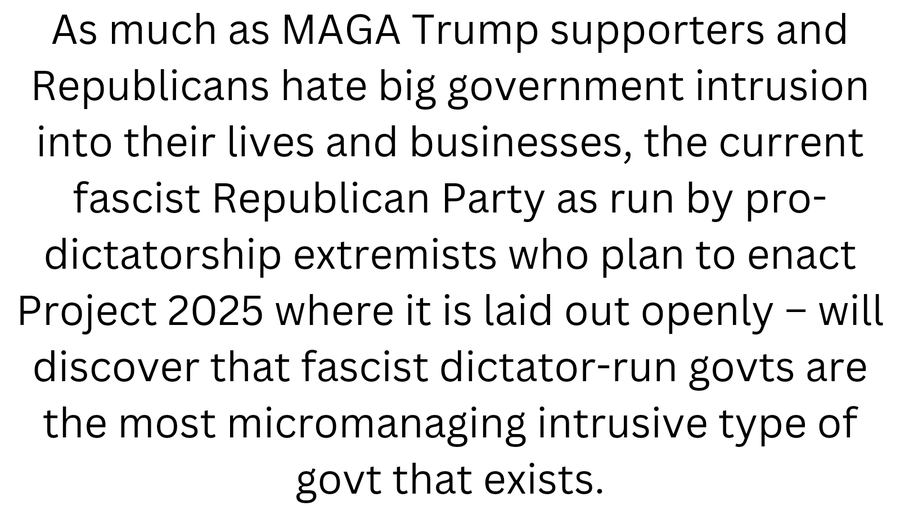



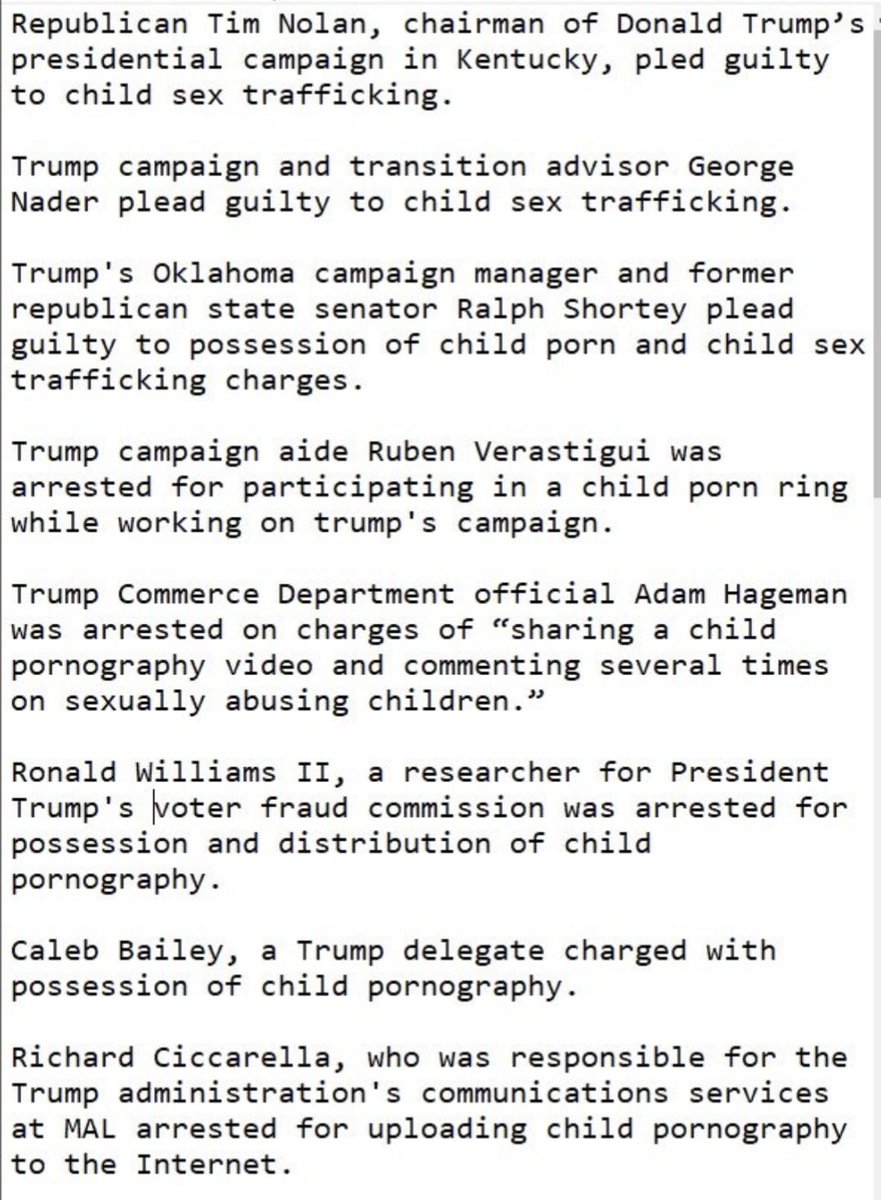





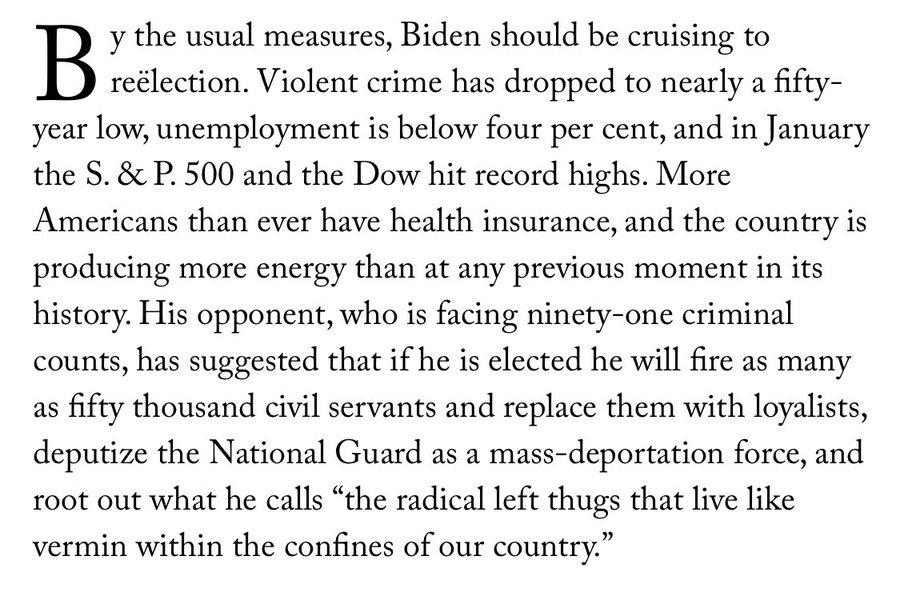

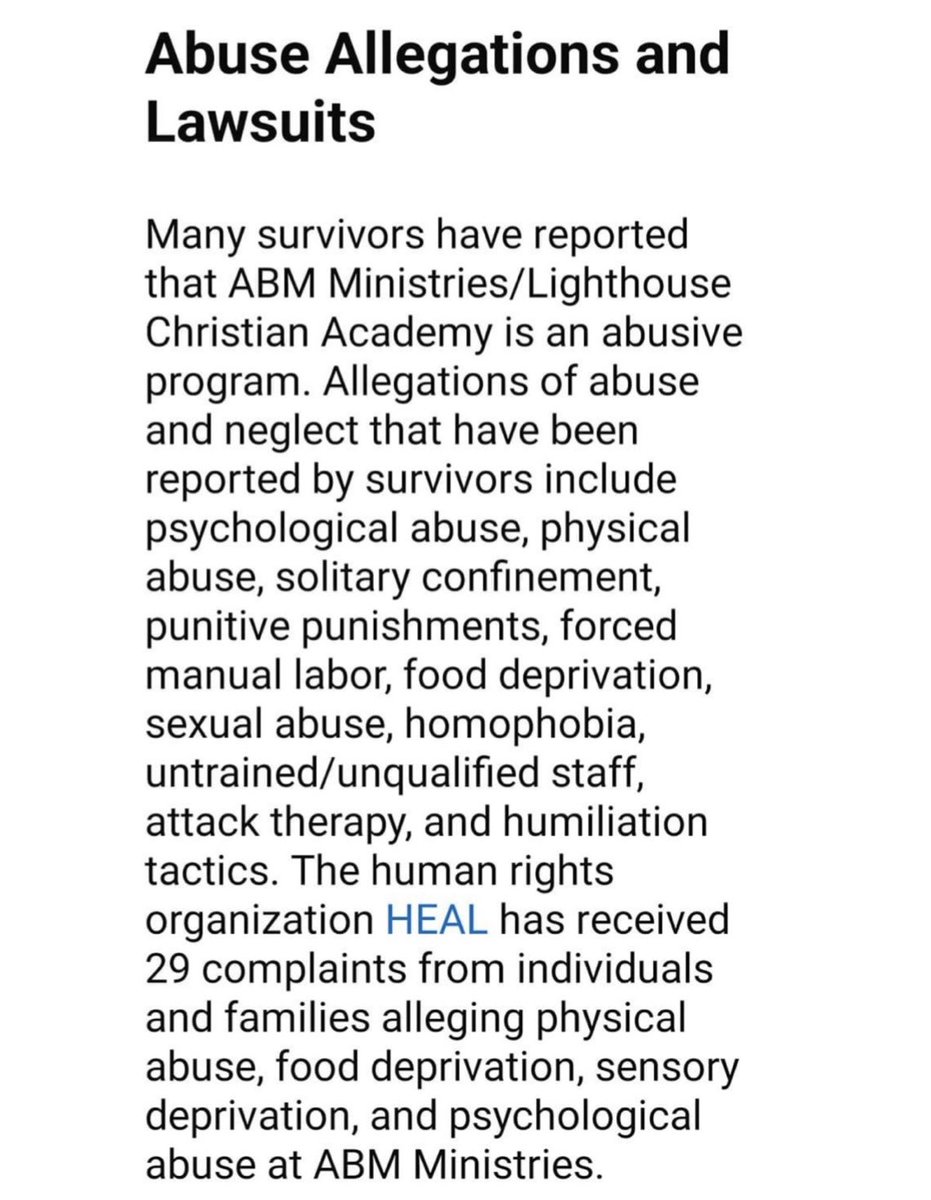
 Cricketdiane's Weblog